Anger Management Counseling for Kids: A Parent's Guide
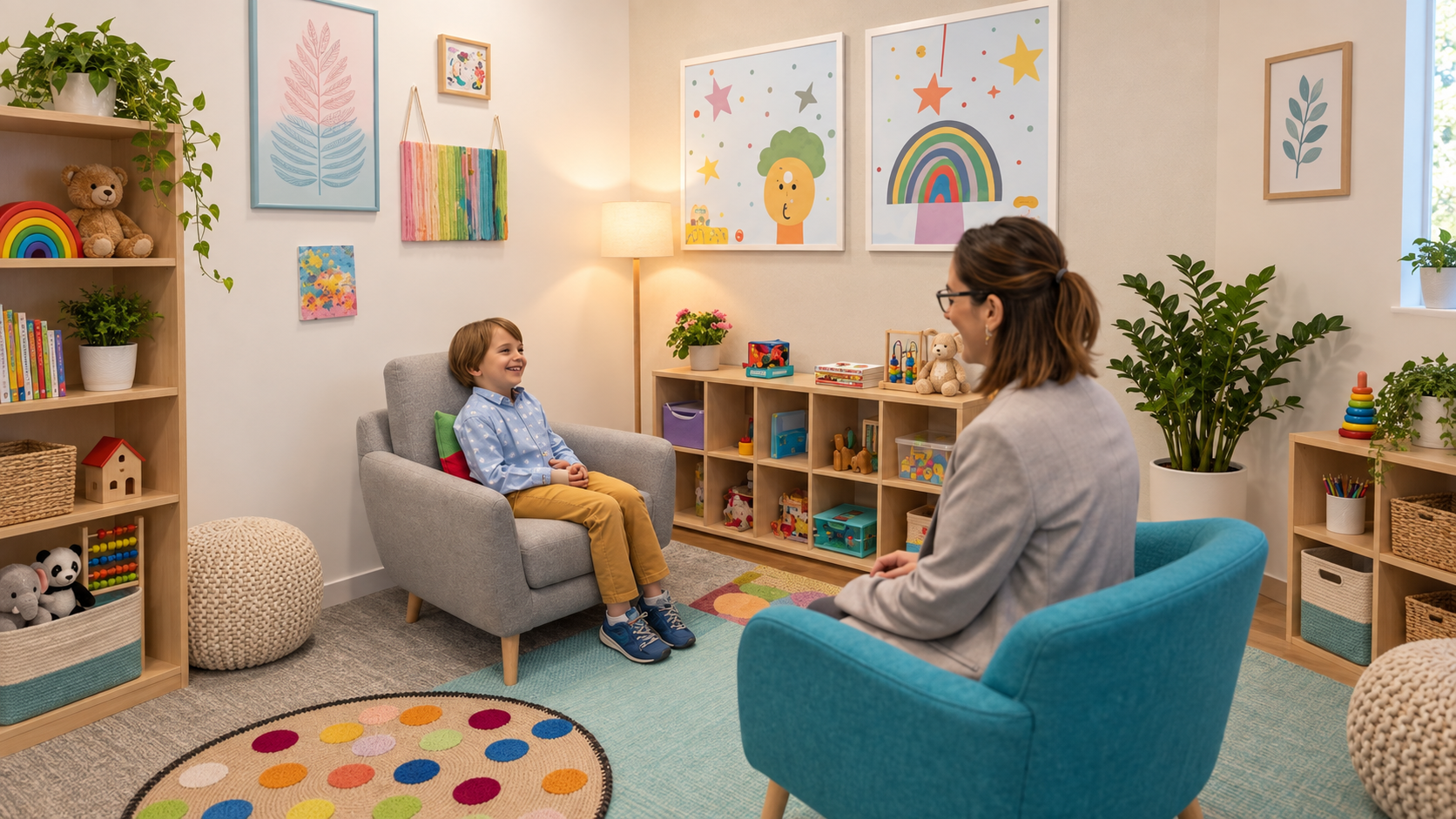
Anger is a normal, healthy emotion. The goal of anger management counseling is not to stop a child from ever feeling angry; it is to help them understand their feelings, respond more safely, and communicate their needs more clearly. When anger becomes frequent, intense, or starts affecting school, friendships, or family life, counseling may offer meaningful support.
Why Anger in Children Is Not Always What It Looks Like
Anger is often the emotion that gets the most attention because it is the most visible. A slammed door, a shouting match, or a meltdown at school is hard to ignore. But for many children and teenagers, anger is the surface layer of something deeper.
Underneath frequent or intense anger, there may be anxiety, grief, or depression. A child struggling with ADHD may act out because impulse control is genuinely harder for them. A child with autism may become overwhelmed by sensory experiences and express that distress through what looks like rage. A student who is quietly frustrated by a reading difficulty or a math concept may explode when pushed just a little too far.
Learning differences, bullying, family stress, major life changes, and difficulty expressing needs can all contribute to angry outbursts. Sleep problems are also an underappreciated factor. A child who is regularly sleep-deprived has less capacity to regulate emotions, and small frustrations can feel enormous.
This is important because it affects how a family should respond. If ADHD, anxiety, or a learning challenge is playing a role, addressing only the anger without looking at what may be driving it through a services overview often produces limited results. A qualified professional can help sort out what is happening and what kind of support makes the most sense.
Signs That Counseling May Be Worth Considering
Every child loses their temper sometimes. That is not a reason to seek therapy on its own. Age, development, and circumstances all matter. A five-year-old having a tantrum is behaving in a developmentally expected way. A fifteen-year-old who throws furniture is a different situation.
Some signs that anger management counseling or a professional conversation may be appropriate include frequent or intense emotional outbursts that happen regularly and are difficult for the child or parent to predict. Physical aggression such as hitting, kicking, biting, or throwing objects is worth taking seriously, especially when it becomes a pattern. Difficulty calming down after becoming upset, lasting far longer than expected, is also a signal worth noting.
Other signs include regular conflict with siblings, classmates, or teachers related to anger, school discipline for aggressive or disruptive behavior, and friendships ending because of how the child behaves when upset. Some children begin avoiding situations because they are afraid of losing control. That kind of anticipatory anxiety around anger is its own concern.
Children and teenagers who feel deeply guilty or ashamed after an outburst are often struggling with the gap between who they want to be and how they are behaving. That gap is painful, and counseling can be a genuinely useful space to work through it.
What Happens in Anger Management Counseling
Sessions will look different depending on the child's age, personality, and what is driving the anger. There is no single method that works for every child. A good therapist will start by getting to know the child, understanding their history, and figuring out what is actually happening before deciding on an approach.
That said, several themes tend to come up in counseling for anger issues with younger clients. One of the first areas is identifying triggers. Children are often unaware of what sets them off, and bringing that awareness to the surface is a foundational step. Once a child can recognize their triggers, they have more ability to anticipate and prepare.
A related skill is noticing physical warning signs. Anger does not arrive without warning; the body sends signals first. A racing heart, tight chest, clenched jaw, or warm face can all appear before an outburst. Helping a child notice these signals early gives them a window to intervene before things escalate.
From there, counseling often involves practicing calming and coping skills. These might include slow breathing techniques, a physical movement to release tension, or a structured way to pause and create space between feeling angry and reacting. These are not tricks to suppress emotion; they are tools to help the nervous system settle enough to think clearly.
Communication and problem-solving are often part of the work as well. Many children who struggle with anger have not yet learned how to ask for what they need, say when something feels unfair, or navigate conflict without shutting down or escalating. Building those skills takes time and repetition, but it produces durable change.
Parents are frequently involved in the process, especially for younger children. A therapist may work with parents on how to respond to outbursts at home, how to set limits clearly and calmly, and how to notice and praise the moments when their child handles frustration well.
How Parents Can Support Progress at Home
What happens between counseling sessions matters as much as what happens during them. Parents are not therapists, and they are not expected to be. But consistent, supportive responses at home make a real difference in how quickly and how durably a child's skills develop.
Listening after everyone is calm is one of the most effective things a parent can do. When the storm has passed, a quiet, non-judgmental conversation helps a child process what happened and feel understood rather than ashamed.
Naming the emotion without approving the behavior is a skill that takes practice but pays off. "I can see you were really frustrated" is different from "that kind of tantrum is unacceptable." Both things can be true at once: the feeling was valid, and the way it was expressed was not okay.
Setting clear and consistent limits matters, especially when a child is working to change their behavior. Limits that shift based on how loud or persistent the child is teach the child that escalating gets results. Consistent limits, applied calmly, give the child something stable to work with.
Noticing and naming the moments when a child handles frustration well, even imperfectly, is important. Many children with anger difficulties receive far more attention for their worst moments than for their progress. Shifting that ratio, even slightly, supports motivation and builds confidence.
Modeling matters too. Children observe how adults handle their own frustration, disappointment, and conflict. A household where adults manage difficult feelings with some degree of calm and respect is teaching those skills constantly, even when no one is talking about it.
If anger is also showing up at school, working with the child's teachers or school counselor in coordination with the therapist can help create consistency across settings.
About The Mind Center
The Mind Center for Kids provides therapy, psychoeducational evaluations, and school support for children, teenagers, adults, families, and educators. The practice has approximately 15 years of experience working with parents, students, and schools, and has completed more than 5,000 school-based evaluations.
Services are available to families in Washington, DC, Maryland, Virginia, and South Florida including Palm Beach, Broward, and Miami-Dade counties. The Mind Center also accepts select virtual therapy cases for children ages 7 and older, when that format is clinically appropriate.
If you are wondering whether therapy is the right next step for your child, you do not need to have everything figured out before reaching out. A conversation with a qualified professional can help clarify what your child may need and what support is available. You can contact The Mind Center by calling or texting (561) 888-0102.
Frequently Asked Questions
Q: What's the best therapy for anger management?
Cognitive Behavioral Therapy, commonly called CBT, is one of the most widely used and well-supported approaches for anger management counseling with children and teenagers.
CBT helps young people identify the thoughts and beliefs that fuel angry reactions, and then practice more helpful ways of thinking and responding. For younger children, play-based therapy or behavioral approaches may be more appropriate than talk-based methods. The best therapy for any individual child depends on their age, what is driving the anger, and what they respond to best. A qualified therapist will help determine the right fit after getting to know your child.
Q: What are the 5 levels of rage?
Anger is often described on a scale ranging from mild irritation at the low end to explosive rage at the high end, with several stages in between.
A common framework identifies five levels: annoyance or mild frustration, moderate anger where the feeling becomes harder to ignore, strong anger where thinking clearly becomes more difficult, intense anger where self-control begins to break down, and explosive rage where a person may act in ways they later regret. Teaching children to recognize where they are on this scale is a practical skill developed in counseling. When a child can name their level early, they have a better chance of using a calming strategy before reaching the top of the scale.
Q: What is the healthiest way to control anger?
The healthiest approach is not to suppress anger but to recognize it early, pause before reacting, and then express it in a way that is honest and respectful.
For children and teenagers, this usually starts with body awareness, noticing physical warning signs like a tight chest or clenched hands before the feeling becomes overwhelming. Slow, deliberate breathing is one of the most accessible and effective tools for settling the nervous system in those early moments. Over time, children also benefit from learning how to name what they are feeling and ask for what they need using words rather than behavior. These are skills that develop gradually with practice and consistent support at home and in therapy.
Q: What are some exercises I can do to manage anger?
Several practical exercises can help children and teenagers manage anger more effectively, including slow breathing, physical movement, and structured pausing techniques.
Slow belly breathing, where the child inhales for a count of four and exhales for a count of six or more, activates the body's calming response and can interrupt an escalating reaction. Physical movement such as a short walk, stretching, or squeezing a stress ball gives the body a safe outlet for tension. Some therapists teach a structured pause technique, where the child has a pre-agreed phrase or signal that means they need a few minutes before continuing a difficult conversation. Journaling or drawing can also help older children and teenagers process strong emotions after the fact. The most useful exercises are the ones a child is willing to practice regularly, not just when they are already upset.
Q: What is the root cause of anger issues?
There is rarely a single root cause; anger issues in children and teenagers typically reflect a combination of emotional, developmental, environmental, and sometimes neurological factors.
Anxiety and depression are among the most common underlying contributors, because both can lower a child's tolerance for frustration and make everyday stress feel unmanageable. ADHD affects impulse control in ways that can make it genuinely harder to pause before reacting. Trauma, grief, bullying, family conflict, and learning difficulties can all add layers of stress that show up as anger. For some children, sensory sensitivities related to autism play a significant role. Identifying what is underneath the anger is one of the central goals of working with a qualified therapist, and in some cases a psychological evaluation is the clearest way to get those answers.
The Bottom Line on Anger Management Counseling
Anger is not the enemy. It is a signal that something matters, something feels unfair, or something is genuinely hard. The goal of anger management counseling is to help your child understand that signal, respond to it safely, and build the skills to navigate difficult moments without damaging their relationships or sense of self.
If anger is affecting your child's relationships, school performance, or family life, that is worth taking seriously. Early support tends to produce better outcomes than waiting. The Mind Center for Kids works with children, teenagers, and families across Washington, DC, Maryland, Virginia, and South Florida to provide therapy and evaluations that are practical, clear, and built around each child's individual needs. Reach out by calling or texting (561) 888-0102, or contact the team to start a conversation about whether therapy is the right next step for your child.