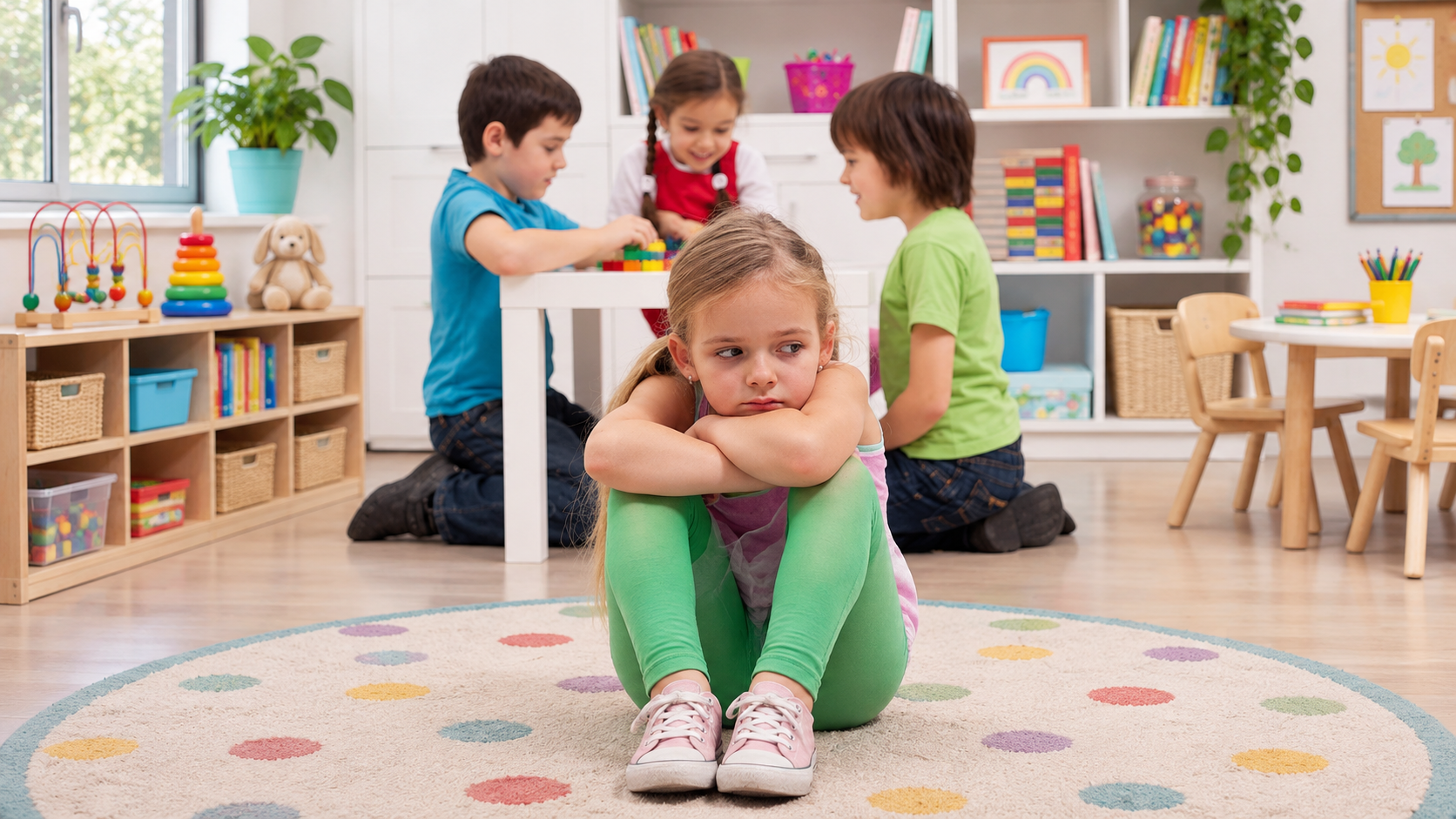
Autistic children can experience anxiety, but anxiety is not the same thing as autism. Not every autistic child has an anxiety disorder, and not every moment of distress points to anxiety as the root cause.
That distinction matters because it shapes how you respond. A child melting down after a fire drill may be overwhelmed by sensory input, not spiraling into generalized worry. A child refusing school may be experiencing real fear, or they may be exhausted from masking all day. Understanding the difference helps you offer the right kind of support rather than the wrong kind of pressure.
Why Anxiety and Autism Often Appear Together
Research from institutions such as the Child Mind Institute has consistently noted that anxiety is one of the most common co-occurring conditions in autistic children, though exact prevalence estimates vary widely depending on how anxiety is measured and defined.
That overlap makes sense when you consider what daily life often looks like for an autistic child. Social rules shift without warning. Sensory environments can be physically painful. Communication takes enormous effort. School hallways are loud. Lunch tables are unpredictable. When a child faces those challenges repeatedly without enough support, the nervous system stays on high alert.
What usually trips families up here is assuming that because anxiety and autism share some surface features, one explains the other. They do not. Autism describes how a child processes the world. Anxiety describes a pattern of fear or worry that exceeds what the situation calls for and gets in the way of daily functioning.
Signs That May Point to Anxiety in Autistic Children
Anxiety in autistic children does not always look like visible worry. Some children ask for reassurance dozens of times a day. Others go unusually quiet. Some refuse activities they used to enjoy or develop stomach complaints every Sunday night before the school week starts. Sleep problems are common, particularly trouble falling asleep because a child's mind keeps cycling through what could go wrong.
What you are looking for is change from that child's usual behavior. A child who has always loved swimming suddenly refusing to get in the pool deserves more curiosity than correction. A child who has always been flexible about snacks but now cries if a food item touches another one may be signaling that something is building up.
Irritability is another sign adults often misread. When a child lashes out before a dentist appointment or becomes rigid about small details during a stressful week at school, that rigidity can be the anxiety talking, not defiance.
None of these signs, on their own, confirm an anxiety disorder. They are starting points for observation and conversation, not a checklist for a diagnosis.
What Often Triggers Distress
Unexpected changes are among the most reliable triggers. When a substitute teacher shows up, a preferred class gets canceled, or a school assembly replaces regular schedule time, an autistic child loses the predictability that helps them feel safe. That loss of predictability can tip a manageable day into a genuinely difficult one.
Sensory overload deserves its own category. Fluorescent lights, background noise, the texture of a school uniform, or the smell of the cafeteria can accumulate across a day until the nervous system has nothing left. At that point, what looks like an emotional outburst may actually be the result of hours of unacknowledged sensory strain.
Social pressure and bullying also contribute significantly. Many autistic children are aware that social situations feel harder for them, and that awareness can generate real anticipatory anxiety. Bullying, which autistic children face at disproportionate rates, compounds this considerably. If a child is dreading the playground, they may not say "I am being bullied." They may say their stomach hurts. They may stop eating lunch.
Pain and other physical health issues can also contribute to distress that gets labeled as anxiety or behavioral. A child who cannot reliably communicate pain may show it through behavior changes. Ruling out medical causes before attributing everything to anxiety is worth doing.
Listening to Your Child's Communication
Children communicate distress in many ways. Some use speech. Others rely on picture exchange systems, AAC devices, or gestures. Some express what is wrong through play or drawing before they can say it directly.
Asking "are you worried?" may not get you far if the child does not yet connect that word to their internal experience. Asking "what makes that hard?" or "what would make it easier?" often opens more doors. Noticing patterns across time, such as which days are rougher, which settings trigger avoidance, and which people or places feel safer, gives you more useful information than any single conversation.
Teachers play an important role here. A child who seems fine at home may be holding it together all day at school and falling apart in the car on the way home. When parents and teachers compare observations regularly, they often find the picture becomes much clearer.
Support at Home and at School
Predictability is one of the most powerful anxiety supports available, and it costs nothing. Visual schedules, advance warnings before transitions, and consistent routines reduce the number of surprises a child has to manage. That reduction lowers the baseline level of stress significantly over time.
At school, a designated quiet space where a child can decompress without it feeling like a punishment can make a real difference. Clear, written or visual instructions reduce the cognitive load of figuring out what is expected. Breaks built into the day, before the child reaches overload rather than after, give the nervous system a chance to reset.
Addressing bullying and social safety is not optional. No amount of coping skill work compensates for an environment that remains unsafe or unkind. If a child is being teased, excluded, or targeted, that needs direct intervention, not just anxiety management strategies.
At home, it helps to stay curious rather than reactive when your child refuses something or escalates quickly. The refusal usually has a reason. Finding that reason takes longer than demanding compliance, but it leads somewhere useful.
Therapy Approaches That May Help
Cognitive behavioral therapy, commonly called CBT, is one of the more studied approaches for anxiety in children. In plain terms, it helps children understand what worry is, notice when it is showing up, and practice responses that reduce its hold over their choices.
For autistic children, standard CBT often needs to be adapted. That can mean using visual tools instead of or alongside verbal explanations, breaking skills into smaller and more concrete steps, allowing more time and repetition, and involving parents directly in sessions so skills transfer to real settings.
The catch is that CBT is not the right fit for every autistic child. Some children need to work first on communication tools or emotional identification before anxiety-specific work is productive. Others do better with approaches that prioritize sensory regulation or environmental changes over thought-challenging exercises. A good clinician will assess what actually fits the child rather than applying one framework to everyone.
The Mind Center for Kids offers psychological services for children experiencing anxiety, including tailored therapeutic support that accounts for a child's communication style, sensory profile, and individual needs.
When to Seek Professional Support
Persistent worry or distress that is affecting sleep, school attendance, friendships, or basic daily activities is worth taking seriously with professional support. You do not need to wait until things become a crisis.
An anxiety assessment for an autistic child does not automatically require a full new autism evaluation. If your child has already been diagnosed and you are specifically concerned about anxiety, that concern can often be addressed in a targeted consultation.
Families in Washington DC, Maryland, Virginia including Northern Virginia, and South Florida covering Palm Beach, Broward, and Miami-Dade counties can access support through The Mind Center for Kids, which provides virtual psychoeducational testing washington dc for families who cannot travel to an office depending on location and clinical appropriateness.
You can reach The Mind Center for Kids by phone or text at (561) 888-0102, or through the contact page on the website to ask questions and schedule a consultation.
Frequently Asked Questions
Q: What does anxiety look like in an autistic child?
Anxiety in autistic children often shows up as repeated worries, reassurance seeking, avoidance, sleep problems, stomach complaints, or unusual irritability, and it typically represents a change from the child's usual behavior.
It may not look like visible nervousness. Some children become quieter or more rigid. Others develop strong physical complaints before specific situations. The pattern over time matters more than any single episode.
Q: What is the 3-3-3 rule for anxiety children?
The 3-3-3 rule is a simple grounding exercise where a child names three things they can see, three sounds they can hear, and moves three parts of their body to shift attention away from anxious thoughts.
It is used by some therapists as a quick reset tool during moments of worry. For autistic children, it may work well for some and not at all for others depending on sensory sensitivity and how they process instructions in distress.
Q: How to treat anxiety in autistic children?
Treatment usually involves a combination of environmental supports, adapted therapy such as CBT, parent involvement, and in some cases medication reviewed by a physician or psychiatrist.
No single approach works for every child. What helps most depends on the child's communication style, sensory profile, and the specific situations driving their anxiety. Starting with a professional assessment is the most reliable way to build an appropriate plan.
Q: Is there a connection between autism and panic attacks?
Yes, some autistic children do experience panic attacks, which are sudden surges of intense fear with physical symptoms such as racing heart, shortness of breath, or dizziness.
Panic attacks in autistic children can be harder to identify because the child may not describe the experience in typical terms or may show it through behavior rather than speech. Sensory overload can also produce symptoms that look similar to panic.
Q: What is the #1 worst habit for anxiety?
Avoidance is widely considered the most counterproductive habit for anxiety because it provides short-term relief while reinforcing the belief that the feared situation is genuinely dangerous.
For autistic children, this does not mean forcing them into overwhelming situations. It means gradually and carefully supporting them to access meaningful activities with the right accommodations in place, rather than arranging life around complete avoidance.
The Bottom Line on Anxiety in Autistic Children
Anxiety in autistic children is real, common, and treatable, but it requires support that is built around the actual child rather than a standard checklist. Sensory needs, communication style, school environment, and daily routines all shape what helps and what makes things worse.
If worry or distress is affecting your child's daily life, contact The Mind Center for Kids to schedule a consultation and discuss support that fits their needs. The team brings approximately 15 years of experience working with families, schools, and children navigating exactly these kinds of challenges.