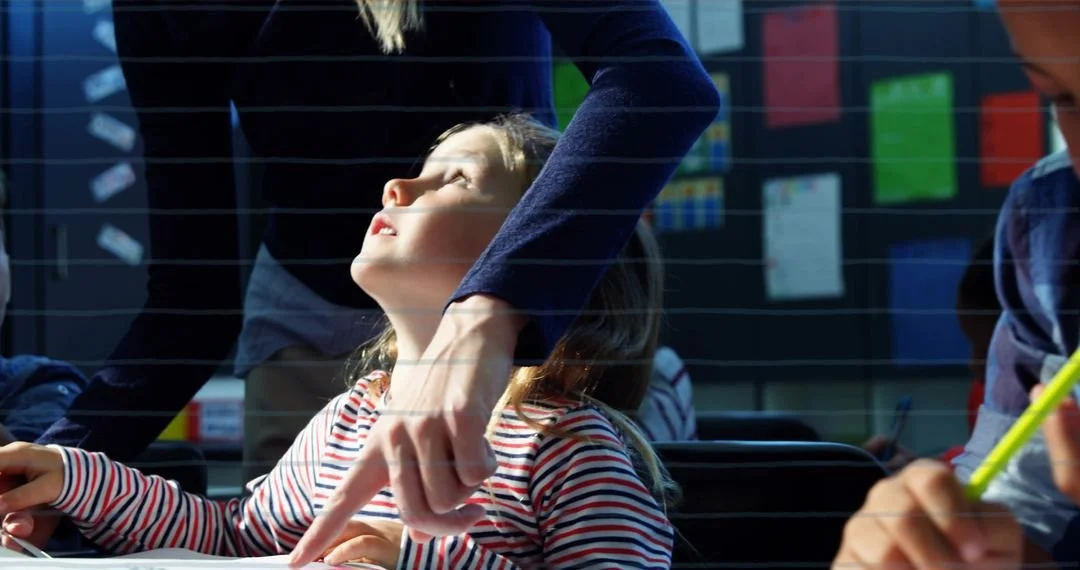
Bilingual children can absolutely have learning disabilities, and learning two languages does not cause them. If your child keeps struggling with reading, writing, spelling, or math despite good teaching and support, that pattern deserves attention regardless of their language background.
Understanding this distinction matters because many families wait too long, assuming the difficulty will disappear once their child's English improves. In practice, a learning disability affects how the brain processes information, and that challenge shows up across languages, not just the one being learned.
What Looks Normal in Bilingual Children
Mixing languages in the same sentence, called code-switching, is one of the most misunderstood behaviors in bilingual kids. Parents sometimes worry about it, but code-switching is a normal and even sophisticated skill. It does not signal confusion or a language problem.
Knowing different words in each language is also expected. A child who learned kitchen vocabulary at home in Spanish but learned school vocabulary in English will naturally have stronger word knowledge in different areas depending on the language. That is not a gap. It is how language builds across contexts.
Being stronger in one language than the other is common too, especially during the early school years. Bilingual children often go through a phase where their home language temporarily drops while they absorb the school language. Teachers sometimes interpret this drop as regression. What usually trips people up here is that normal bilingual development can genuinely look like a problem if you only look at one language at one point in time.
None of these patterns, on their own, point to bilingual child learning difficulties. They become worth looking at more closely only when they persist, affect multiple skills, and do not respond to good teaching.
When School Struggles Go Beyond Language Exposure
The pattern worth paying attention to is difficulty that continues even after reasonable support and time. Consider a child who has been in an English-language classroom for two or more years, receives extra help, and still cannot reliably decode simple words, track the sequence of a simple story, or add single-digit numbers. That is different from a child who arrived recently and is still building vocabulary.
Reading, writing, and math are the core areas to watch. A bilingual child struggling with reading in both their languages, not just in English, is showing a pattern that language learning alone cannot explain. The same is true for writing: if a child reverses letters, cannot organize a simple sentence, or avoids writing tasks in any language, those observations carry weight.
Math presents an interesting case. Numbers and mathematical reasoning are less language-dependent than reading and writing, so significant math struggles in a bilingual child are less likely to be explained by language exposure. If your child cannot reliably count, recognize basic patterns, or follow simple arithmetic steps, ask about it directly with their teacher.
Low test scores in English alone are not enough to identify a learning disability. A single score on an English-language reading assessment cannot tell you whether the difficulty is about language learning or something deeper. The score could reflect limited English instruction, test anxiety, unfamiliar vocabulary, or an actual learning difference. Separating those possibilities requires more information than any single test can provide.
What a Thoughtful Evaluation Actually Considers
A good evaluation for a bilingual child does far more than administer a battery of tests in English. The evaluator should gather information about the child's language history: which language was spoken at home first, how much instruction the child has received in each language, how long they have been in their current school setting, and what their early literacy exposure looked like.
Work samples, school records, and observations from both parents and teachers all carry real diagnostic weight. A psychologist reviewing three years of consistent reading struggles, combined with teacher notes about phonics difficulties and a parent's description of the child avoiding books in both languages, is building a picture that test scores alone cannot create.
Where possible, it helps to assess relevant skills across both of the child's languages. A difficulty that appears only in English may reflect language learning. A difficulty that appears in both languages points more clearly toward a learning difference. The pattern does not need to be identical in both languages to be meaningful. Bilingual children do not have to fail equally in both languages for a concern to be real.
Ask any evaluator about their experience with bilingual learners specifically. Translation, meaning taking a test designed for English speakers and simply translating the instructions into another language, does not automatically make the results valid. Norms developed for one language group do not transfer cleanly to another. Families who want learning disability testing washington dc or surrounding areas should ask directly whether the clinician has experience interpreting results for bilingual children and whether trained interpreters are available when needed.
Choosing the Right Kind of Support
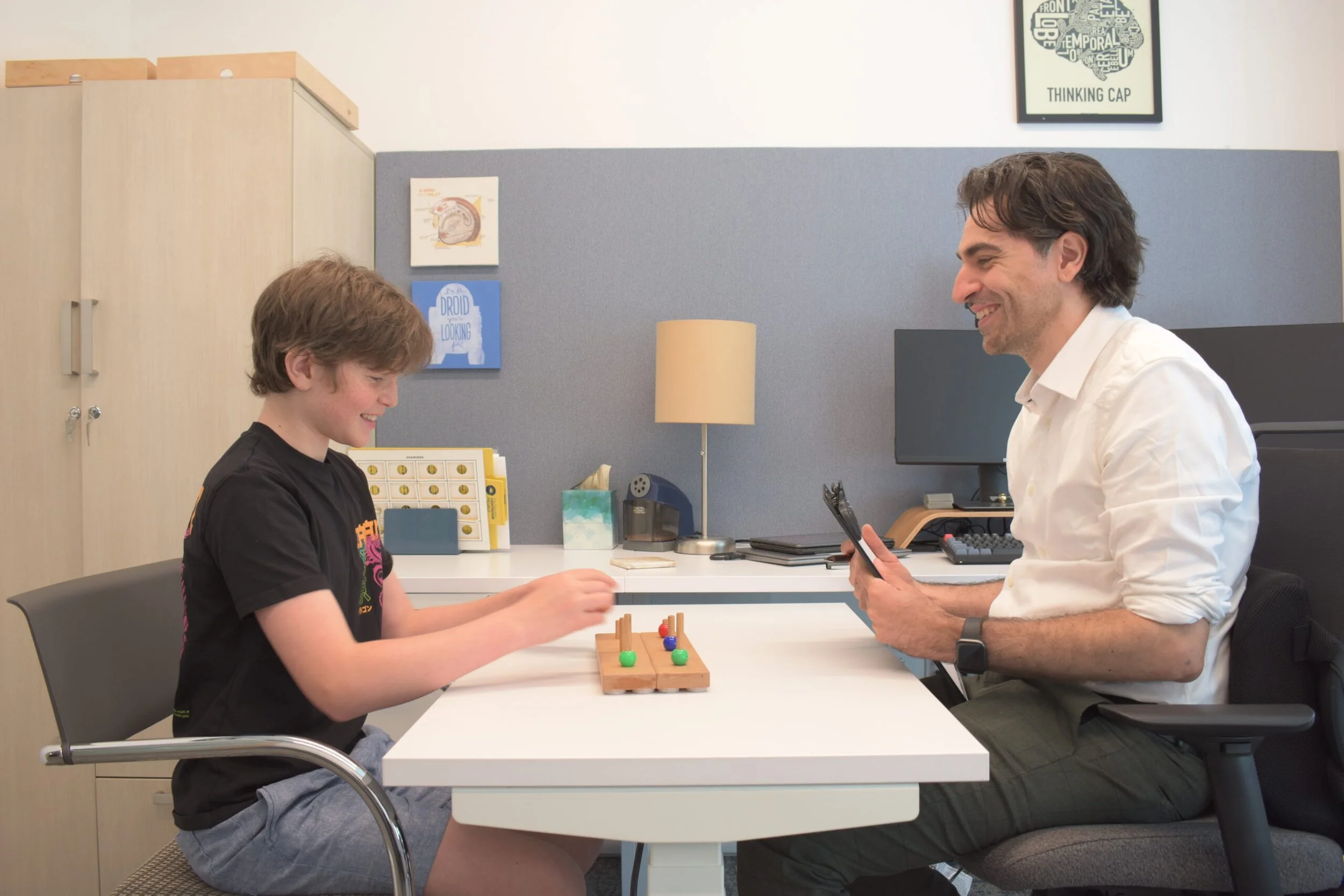
A psychoeducational evaluation completed by a licensed psychologist is typically the starting point for identifying a learning disability. It examines cognitive skills, academic achievement, processing abilities, and sometimes attention, all compared to age-level expectations. This kind of evaluation can support an IEP, a 504 Plan, or specific classroom accommodations through the services offered by specialized centers.
If the concern centers more on how your child understands or uses language in conversation, classroom discussions, or following instructions, a speech-language pathologist may also be part of the picture. These two professionals often work together, and there is no reason to choose one over the other if both areas are a concern.
One thing worth emphasizing: language support and learning support do not have to wait for each other. A child can receive English language instruction and reading intervention at the same time. Waiting for a child to "finish" becoming fluent before testing or supporting academic skills is a delay that often costs children years.
Practical Steps Families Can Take Right Now
Keep using your home language. Research is clear that strong skills in a first language support learning in a second language, not the opposite. Telling families to stop speaking Spanish, Amharic, or Vietnamese at home is advice that does more harm than good. Tell stories, read aloud, and discuss daily events in whichever language feels natural. Those experiences build vocabulary and comprehension in ways that transfer.
For school tasks, ask teachers to use pictures alongside written directions, pre-teach key vocabulary before lessons, and check that your child understands what they have read rather than just that they finished the page. These are reasonable accommodations that any classroom can offer.
Document what you observe. Write down specific examples: "She read the same sentence three times and still could not explain what it meant." "He cried before every spelling test for the past four months." "She can do the math if I read the word problem aloud, but not when she reads it herself." Specific observations help evaluators and teachers far more than general descriptions of struggle.
Talk to the school early rather than waiting for a formal referral. Parents in the United States have the right under the Individuals with Disabilities Education Act (IDEA) to request an evaluation at any time, in writing. Schools are required to respond within a set timeline. Knowing that right can prevent long delays.
The Mind Center for Kids has completed more than 5,000 school-based evaluations over approximately 15 years of practice. The team provides comprehensive psychoeducational evaluations with clear, readable reports and practical recommendations that families and teachers can actually use. You can review their services to understand what an evaluation covers and how the process works.
The Mind Center serves families in Washington, DC; Maryland; Virginia, including Northern Virginia; and South Florida, covering Palm Beach, Broward, and Miami-Dade counties. In-person and virtual options are available where clinically appropriate.
If your child's reading, writing, or math struggles have continued across time and have not responded to support, contact The Mind Center for Kids to discuss their learning and language history. An evaluation may be the clearest way to understand what your child needs and how to help them move forward.
Frequently Asked Questions
Q: What are the signs of a learning disability in a 7-year-old child?
A 7-year-old with a learning disability often shows persistent difficulty with reading, spelling, writing, or basic math despite regular classroom instruction and extra support.
At this age, the clearest signals are ongoing struggles to connect letters with sounds, slow or labored reading compared to classmates, difficulty remembering sight words from one day to the next, and frustration or avoidance around any task involving print. For math, watch for consistent trouble counting reliably, recognizing number patterns, or following simple addition steps. One or two hard days is not a sign. The pattern that repeats across weeks and months, without improvement from support, is what deserves a closer look.
Q: How does being bilingual affect child development?
Bilingualism supports brain development in several meaningful ways and does not cause learning disabilities or developmental delays.
Children who grow up using two languages regularly build strong cognitive flexibility, which is the ability to switch attention between tasks and think from more than one perspective. They often develop sharp listening skills because they learn early to pay attention to context. The trade-off is that bilingual children may have smaller single-language vocabularies than monolingual peers, simply because their word knowledge is spread across two languages. That is a measurement artifact, not a deficit. Total vocabulary across both languages is typically comparable. Learning difficulties in bilingual children are not caused by speaking two languages at home.
Q: What are the 8 types of learning disabilities?
The most widely recognized learning disabilities affect reading, writing, math, language processing, motor coordination, auditory processing, visual processing, and nonverbal learning.
Dyslexia affects reading and decoding. Dysgraphia affects written expression and handwriting. Dyscalculia affects mathematical reasoning and number sense. Language processing disorder affects understanding and using spoken language. Auditory processing disorder affects how the brain interprets sounds even when hearing is normal. Visual processing disorder affects how the brain makes sense of what the eyes see. Nonverbal learning disability affects spatial reasoning, social cues, and tasks that require interpreting non-language information. Some professionals also identify specific learning disabilities in oral expression and listening comprehension as separate categories. A comprehensive psychoeducational evaluation is the standard way to identify which of these is affecting a specific child.
Q: What are the signs and symptoms of processing delay in children?
Processing delay shows up as a consistent gap between understanding something and being able to respond to it, follow through, or complete a task at the pace expected for a child's age.
In the classroom, a child with a processing delay may need instructions repeated more often than peers, take significantly longer to finish written work, struggle to copy from the board before it is erased, or appear to zone out during fast-paced lessons when in fact they are still working through what was said a moment earlier. At home, families often notice that the child needs extra time to answer questions, frequently loses track of multi-step directions, or becomes frustrated when pushed to respond quickly. Processing delay can appear alongside dyslexia, ADHD, or other learning differences, and it can also appear on its own. The pattern I keep seeing in evaluations is that these children are often described as bright but slow, which makes the delay easy to overlook until academic demands increase.
Q: What can be mistaken for a learning disability?
Several conditions and circumstances can produce struggles in school that look like a learning disability but have different underlying causes.
ADHD is one of the most common. Attention difficulties make it hard to complete reading assignments, follow written directions, and stay on task during math, so the academic output can resemble a learning disability even when reading and processing skills themselves are intact. Vision or hearing problems that have not been identified can also affect reading and listening performance significantly. Anxiety is another frequent factor, particularly for children who shut down during tests or avoid tasks where they fear making mistakes. For bilingual child learning difficulties specifically, limited exposure to the language of instruction is a critical variable. A child who has only been in an English classroom for eight months may score low on a reading assessment for reasons that have nothing to do with how their brain processes language. Trauma, inconsistent schooling, and lack of sleep can also affect attention, memory, and academic output in ways that resemble a learning difference. Sorting through these possibilities is exactly what a thorough evaluation is designed to do.
The Bottom Line on Bilingual Child Learning Difficulties
Learning two languages is a strength, not a risk factor for academic failure. But bilingualism does not protect a child from having a learning disability, and it should never be used as the default explanation when a child keeps struggling despite good support and adequate time. The key question is not whether a child is bilingual. The key question is whether the difficulty persists, affects core academic skills, and does not respond to instruction.
If your child has been getting extra help and the same struggles keep showing up in reading, writing, spelling, or math, an evaluation is the most direct way to understand what is happening. The Mind Center for Kids offers comprehensive psychoeducational evaluations with clear reports and practical recommendations for families and schools in Washington, DC; Maryland; Virginia; and South Florida. You can reach the team by phone or text at (561) 888-0102, or visit the website at themindcenterforkids.com to learn more about the evaluation process and next steps.