Child Therapist for Boca Raton Families | Virtual Care

Finding the right support for your child does not have to feel overwhelming. A child therapist Boca Raton families can access virtually through The Mind Center for Kids offers a focused, caring path forward for children and teenagers who are struggling emotionally, behaviorally, or socially.
You Do Not Need All the Answers Before Reaching Out
One of the most common reasons parents wait before seeking help is that they are not sure whether what they are seeing is serious enough. That hesitation is completely understandable, but it is also one of the most important things to let go of early on.
You do not need a diagnosis. You do not need a precise explanation of what is wrong. What matters is that something has shifted for your child, and you want to understand it better.
A therapist's first job is to listen. They want to hear about your child's day-to-day life, what is happening at home and at school, how your child is getting along with friends, and what you have noticed changing. From that conversation, they can help you figure out whether therapy is the right next step and, if so, what kind of support would fit your child best.
What Virtual Therapy Looks Like for Boca Raton Families
The Mind Center currently accepts select virtual therapy cases for children ages 7 and older. If you are in Boca Raton or the broader Palm Beach County area, this means your child may be able to work with a qualified therapist from the comfort of your own home.
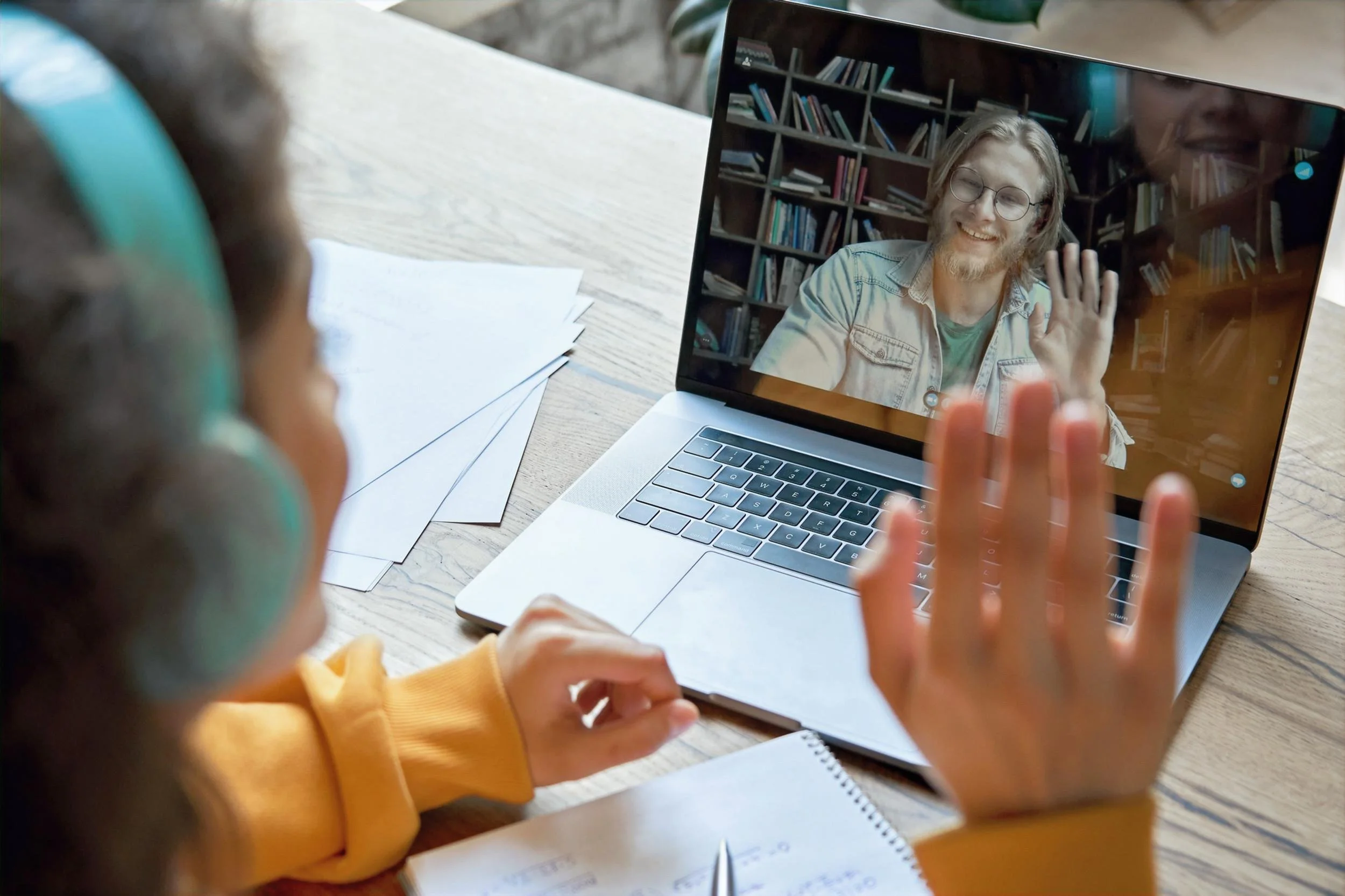
Virtual therapy is not a lesser version of in-person care. For many children and teenagers, attending sessions from a familiar, private space actually makes it easier to open up. Sessions are conducted through a secure, confidential video platform at a scheduled appointment time.
Therapy is adjusted to your child's age, concerns, comfort level, and goals. Depending on your child and the clinician, sessions may involve talking through thoughts, feelings, and experiences, learning healthy ways to manage worry or frustration, practicing communication and problem-solving skills, or exploring age-appropriate activities that help your child express what they are feeling.
Cognitive Behavioral Therapy, which helps children understand how their thoughts, feelings, and actions affect one another, is one approach that clinicians may use. Mindfulness and calming exercises, family involvement when it is helpful, and direct coaching for parents are also part of the range of support available.
Not every therapist uses every approach. When you reach out to The Mind Center, the team works to match your child with a clinician whose training and experience fits your family's specific needs.
When It May Be Time to Talk to a Professional
Most children go through periods of moodiness, worry, or difficulty. Those moments are a normal part of growing up. What tends to signal that professional support may be helpful is when the changes you are seeing persist for several weeks, affect multiple areas of your child's life, or become more intense over time despite your best efforts at home.
Some of the situations that lead Boca Raton parents to reach out include frequent worry or fear that their child cannot shake, sadness or a noticeable loss of interest in things they used to enjoy, trouble managing strong emotions or recurring anger, grief or adjustment after a difficult life change, low self-esteem or persistent struggles with friendships, school-related stress, and difficulty navigating the transition into the teenage years.
These are examples, not a checklist. Every child is different, and a hard week does not automatically mean a child needs therapy. What matters is the pattern, not a single difficult day.
According to Mental Health America (2024), 20.17% of youth between ages 12 and 17 reported experiencing at least one episode of major depression. That figure reflects a genuine and growing need for accessible mental health support for young people, particularly in communities like Boca Raton where families are actively looking for qualified help. The demand for services is real: according to Business Research Insights (2024), the global child psychological counseling service market is projected to grow from approximately USD 0.56 billion in 2024 to USD 1.34 billion by 2033, reflecting an expanding recognition of how essential early mental health support is.
How Parents Are Involved in Their Child's Therapy
Your role in your child's care matters, and a good therapist will make that clear from the beginning. The level of parent involvement typically depends on your child's age, the goals of therapy, and what the clinician determines is most helpful for your child's progress.
During the first appointment, the therapist will likely spend time speaking with you directly. They will ask about your child's history, what you have been noticing, and what you are hoping therapy can provide. Together, you will begin to set goals that make sense for your family.
As therapy continues, the therapist may share general updates on your child's progress, offer guidance on how you can support your child at home between sessions, and recommend family sessions when they would be useful.
You may not have access to everything your child discusses in sessions, and that is intentional. Privacy helps children feel safe enough to be honest with their therapist. Your therapist will walk you through the details of confidentiality, including the safety-related situations where that privacy has limits, so you always understand where things stand.
Choosing the Right Provider for Your Child
There are a number of therapists and psychologists listed through directories like Psychology Today and The Mind Center that serve the Boca Raton area. When comparing your options, it helps to ask a few direct questions before committing to a provider.
Ask whether the therapist is licensed or appropriately supervised. Ask what experience they have working with children or teenagers specifically, and whether they have supported children with concerns similar to your child's. Ask what therapy methods they use, how parents are involved, how they handle urgent safety concerns, and what fees and payment options look like.
At The Mind Center for Kids, you can review our team to learn more about the clinicians available and their areas of expertise. The practice brings approximately 15 years of experience working with children, teenagers, families, and schools, and has completed more than 5,000 school-based evaluations. That depth of experience means the team understands how emotional and learning challenges often overlap, and they are equipped to support the whole picture of your child's wellbeing.
The Mind Center also offers a range of services beyond therapy, including psychoeducational evaluations, ADHD testing, autism assessments, and support for IEPs and 504 Plans. If your child's therapist suspects a learning difference or attention concern may be contributing to what you are seeing, there is a clear path to a more comprehensive evaluation without having to start over with a different provider.
What to Expect When You Get Started
The process is straightforward. A parent contacts the clinic and shares a brief overview of their child's concerns. The team reviews whether the case is a suitable fit for the services currently available. When there is a good match and a clinician is available, the family is introduced to their therapist and an initial appointment is scheduled.
That first session is not a test. It is a conversation. The therapist uses that time to learn more about your child's background, what has been going on, and what your family is hoping to get out of therapy. From there, you and the therapist work together to outline a plan.
The Mind Center does not promise immediate availability or a set number of sessions, because every child is different and every treatment plan is built around what that specific child needs. What the practice does promise is that the evaluation reports and therapy approaches are clear, practical, and written in plain language that parents and educators can actually use.
It is also worth knowing that according to a report cited by Healing Psychiatry Florida (2026), as of December 2025, 40% of the U.S. population lives in federally designated shortage areas without adequate access to psychiatric care. Virtual therapy options like the ones The Mind Center provides help bridge that gap for families in Palm Beach County who are ready to seek support now rather than waiting for in-person availability.
For families in adjacent regions, the practice also offers virtual psychoeducational testing Washington dc and surrounding areas, reflecting a commitment to flexible, remote-accessible care across its service regions.
Ready to Take the Next Step
If you are ready to talk with someone about your child's needs, The Mind Center for Kids is here to listen. You can use the contact page on the website to reach out, or call and text directly at (561) 888-0102. The team will help you understand whether virtual therapy through The Mind Center is the right fit for your family and walk you through what to expect next.
Talk to The Mind Center for Kids About Your Child Today
Your child does not have to keep struggling, and you do not have to keep guessing. The Mind Center for Kids serves families in Boca Raton and across Palm Beach County with virtual therapy for children and teenagers, backed by approximately 15 years of clinical experience and a genuine commitment to clear, practical, family-centered care. Reaching out is the first step, and it does not commit you to anything except a conversation.
Call or text The Mind Center for Kids today at (561) 888-0102, or visit themindcenterforkids.com to send a message and learn more about whether virtual therapy is the right fit for your child.
Frequently Asked Questions
Q: When should I take my child to a therapist?
Consider reaching out when emotional or behavioral changes persist for several weeks, affect multiple areas of your child's life, or do not improve with ordinary support at home.
You do not need to wait until things feel like a crisis. If your child seems consistently overwhelmed, withdrawn, angry, or distressed, and you have noticed the pattern continuing over time, that is a reasonable moment to speak with a professional. A therapist can help you assess whether what you are seeing calls for clinical support or whether other strategies may be worth trying first.
Q: What are signs a child needs therapy?
Signs that a child may benefit from therapy include ongoing sadness, frequent worry, trouble managing emotions, changes in sleep or appetite, withdrawal from friends or activities, declining school performance, and difficulty coping with stress or change.
No single sign automatically means a child needs therapy, and a difficult week is not the same as a pattern. What tends to matter most is duration, intensity, and how much the concern is affecting your child's daily life. If you are noticing several of these signs at once, or if they have been present for more than a few weeks, a conversation with a qualified therapist is a sensible next step.
Q: How to help a child with anxiety and depression?
Start by creating space for your child to talk without pressure, validate what they are feeling, maintain consistent routines, and seek professional support if symptoms persist or interfere with daily life.
At home, you can help by staying calm, listening without immediately trying to fix things, and letting your child know it is safe to share how they feel. Reducing unnecessary stressors and maintaining predictable routines also helps children feel more secure. When anxiety or depression is persistent or severe, working with a licensed therapist gives your child access to evidence-based tools, such as Cognitive Behavioral Therapy, that go beyond what a parent can provide alone.
Q: What is the difference between a child therapist and a child counselor?
The terms are often used interchangeably, but in a clinical and licensing context, therapists typically hold a master's or doctoral degree in a mental health field and are licensed to diagnose and treat mental health conditions, while counselors may hold similar credentials but sometimes focus on shorter-term guidance and coping support.
In practice, the most important distinctions are the individual's specific license, training, and clinical experience rather than the title they use. In Florida, professionals providing therapy services to minors must hold an appropriate state license or be working under the supervision of a licensed clinician. When choosing a provider for your child, ask directly about their credentials, licensure status, and experience working with children in your child's age range and with concerns similar to yours.
Q: Where to find child therapist in Boca Raton?
Families in Boca Raton can find qualified child therapists through directories by contacting The Mind Center for Kids directly for virtual therapy services serving Palm Beach County.
Online directories allow you to filter by specialty, age group, and insurance accepted, which can help you narrow your search quickly. If you are looking for a provider with specific experience in psychoeducational concerns, learning differences, or ADHD in addition to therapy, The Mind Center for Kids is a strong option. The practice accepts select virtual therapy cases for children ages 7 and older in the Boca Raton area. You can call or text (561) 888-0102 or visit themindcenterforkids.com to get started.
The Bottom Line on Child Therapist Boca Raton Families Are Searching For
Finding a qualified child therapist Boca Raton parents can trust is one of the most meaningful steps you can take for your child's long-term wellbeing. You do not need to have everything figured out before making the call. You just need to be willing to start the conversation.
The Mind Center for Kids is ready to listen, ask the right questions, and help you determine whether virtual therapy is the right fit for your child right now. Reach out at (561) 888-0102 or visit themindcenterforkids.com to take the first step today.