Dysgraphia in Children: What Parents Need to Know About Writing Struggles
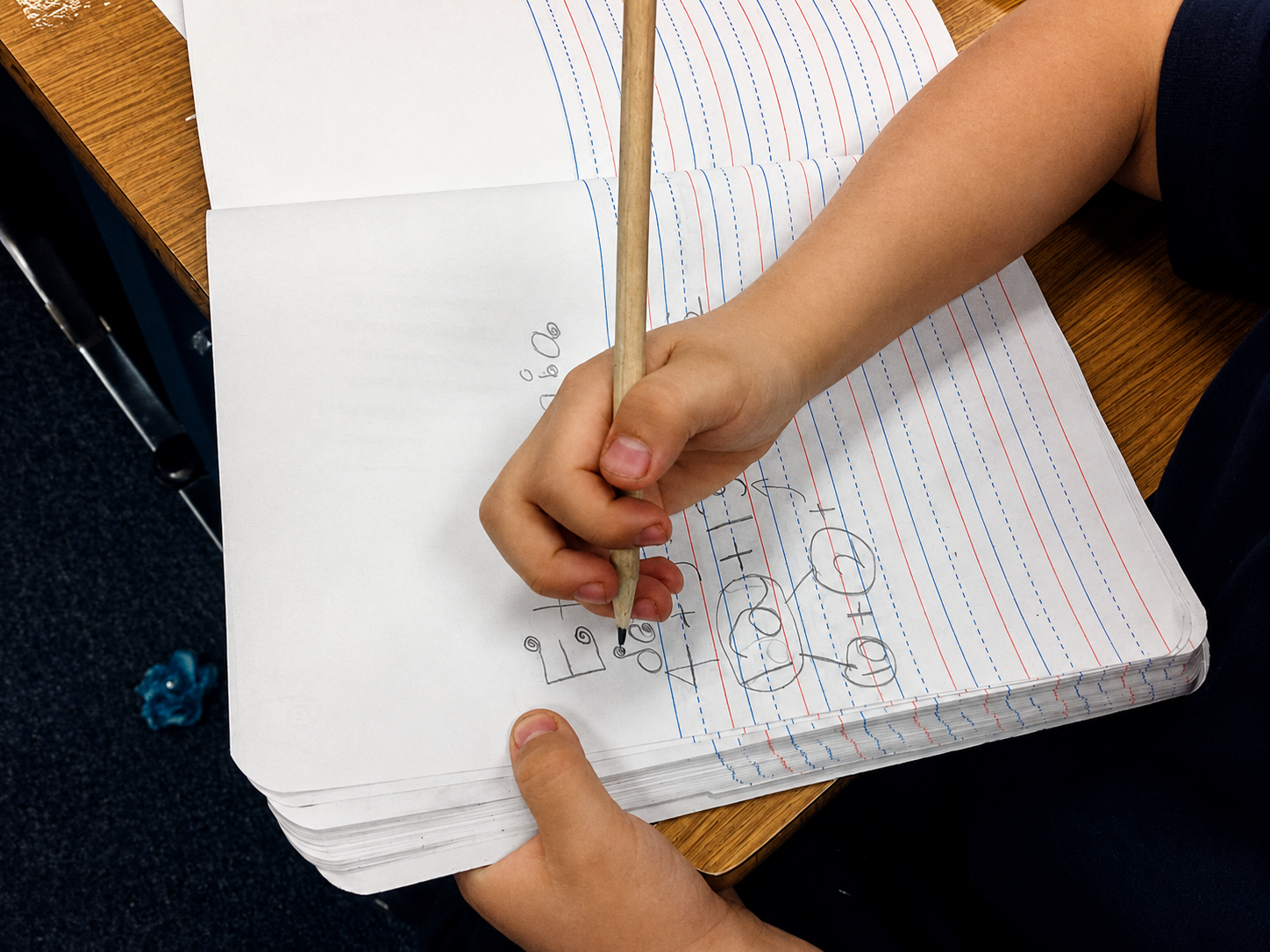
Dysgraphia in children can make writing very hard.
It is more than messy handwriting.
A child may have trouble forming letters, spelling words, or writing ideas on paper. Writing may also take a very long time.
At the same time, the child may speak clearly and know the right answer.
This can be confusing for parents.
Your child may know what they want to say. They may just have a hard time writing it down.
What is Dysgraphia?
Dysgraphia is a learning difference that affects writing. It can make it hard for a child to put thoughts onto paper clearly, quickly, and comfortably.
Many people think dysgraphia only means messy handwriting, but it can involve much more than that.
Dysgraphia may affect:
Handwriting
Spacing
Spelling
Sentence structure
Copying from the board
Organizing ideas
Writing speed
Written expression
Completing assignments on time
A child with dysgraphia may know the answer but struggle to show it in writing.
Signs of Dysgraphia in Children
The signs of dysgraphia in children can look different for every child.
Parents may notice that writing takes much longer than other homework.
For example, a child may finish math in 10 minutes but need 45 minutes to write a few sentences.
Other signs may include:
Handwriting that is hard to read
Letters that change in size
Poor spacing between words
Trouble staying on the line
Very slow writing
A very tight pencil grip
Hand pain or tired hands
Trouble spelling common words
Missing words or letters
Very short written answers
Trouble putting ideas in order
Trouble copying from the board
Avoiding writing
Getting upset during writing tasks
One important sign is a big difference between speaking and writing.
Your child may tell you a full story with many details.
But when asked to write the same story, they may only write a few words.
That difference may be worth looking into.
Is It Dysgraphia or Just Messy Handwriting?
Messy handwriting does not always mean dysgraphia.
Young children are still learning how to write.
It is normal for children in kindergarten or first grade to have uneven letters or slow writing.
What matters is whether the problem continues.
Ask yourself:
Is writing much harder than it should be for my child's age?
Does writing take a very long time?
Does my child's hand hurt when writing?
Is written work much weaker than spoken answers?
Has extra practice helped?
Are teachers also worried?
Does my child avoid writing?
If these problems keep happening, it may be time to ask for help.
An evaluation can help show whether your child needs more support.
Why Can My Child Say the Answer but Not Write It?
This is a common question.
Some children can explain their ideas very well when they speak.
But writing those same ideas can be much harder.
Writing asks the brain to do many things at once.
A child has to remember the idea, choose words, spell, write, and stay organized.
This can become too much.
The child's written work may then look much simpler than their real level of understanding.
This does not mean the child does not know the answer.
It may mean writing is getting in the way.

Dysgraphia vs. Dyslexia: What Is the Difference?
Dysgraphia and dyslexia are different.
Dyslexia mainly affects reading and word skills.
Dysgraphia mainly affects writing.
A child with dyslexia may have trouble reading words or sounding them out.
A child with dysgraphia may have trouble writing words, sentences, or ideas.
Some children have both.
If your child struggles with both reading and writing, testing can help show which skills need support.
Can a Child Have Dysgraphia and ADHD?
Yes.
ADHD and dysgraphia are different, but a child can have both.
ADHD can make it hard to:
Stay focused
Remember information
Plan work
Organize ideas
Finish long tasks
Writing also needs these skills.
This can make writing even harder for a child who has ADHD.
It can also be hard for parents to know what is causing the problem.
Is it attention?
Is it writing?
Is it organization?
Could it be more than one thing?
Testing can help answer these questions.
When Should Parents Consider Testing?
Not every child with messy handwriting needs testing.
But an evaluation may help when writing problems continue and affect school.
You may want to consider testing if:
Writing is much harder than expected
Your child writes very slowly
Writing problems have lasted for a long time
Extra practice has not helped much
Your child's teacher is concerned
Your child avoids writing
Writing causes a lot of stress
Written answers are much weaker than spoken answers
Writing problems are affecting grades
You are not sure if ADHD, dyslexia, or another learning problem is involved
Testing can help your family understand what is making writing hard.
What Does a Dysgraphia Evaluation Look At?
A psychoeducational evaluation is testing that looks at how a child learns.
For writing problems, testing may look at:
Writing
Spelling
Reading
Memory
Attention
Thinking skills
Work speed
Language
Planning
Organization
The goal is to understand the whole picture.
For example, one child may mainly struggle with spelling.
Another may have good spelling but struggle to organize ideas.
Another child may know exactly what to write but have trouble writing quickly enough.
Testing can help find the reason.
It is also important to know that the final report may not always use the word dysgraphia.
The professional may use another term for the child's writing difficulty.
The most important part is understanding what is hard for your child and what support may help.
If pencil control or hand movement is a concern, an occupational therapist may also help.
Families can also learn more about learning disability testing in Washington, DC.
What Can Help a Child With Dysgraphia?
The goal is not only to make handwriting look better.
The bigger goal is to help your child show what they know.
Different children need different types of help.
Support may include:
Extra time for writing
Typing instead of handwriting
Speech-to-text tools
Teacher notes
Less copying from the board
Graphic organizers
Writing outlines
Breaking large tasks into smaller steps
Short breaks during long writing tasks
School accommodations
Occupational therapy when needed
Typing can be very helpful for some children.
It does not mean the child has failed at handwriting.
It simply removes one barrier.
A child may be able to share much better ideas when they do not have to focus so much on forming every letter.
Things Parents Should Know
Writing problems are not always caused by a lack of effort.
Your child may be trying very hard.
Writing uses memory, focus, language, planning, and hand skills all at once.
A problem in one of these areas can make writing difficult.
Also, pay attention when your child becomes very upset about writing.
They may not be trying to avoid work.
Writing may truly feel much harder for them.
An evaluation can help explain why.
It may also help the school understand what support your child needs.
How The Mind Center Can Help
If writing is much harder for your child than speaking, reading, or other schoolwork, an evaluation may help.
The Mind Center provides psychoeducational evaluations for children with learning concerns.
Testing may look at areas such as:
Writing
Reading
Attention
Memory
Learning
Planning
School skills
Families receive a clear report after testing.
The results can help explain what is making school difficult and what support may help.
You also meet with the psychologist to review the results and ask questions.
Call or text 561-888-0102 to speak with The Mind Center team.
The Bottom Line on Dysgraphia in Children
Dysgraphia in children is more than messy handwriting.
A child may know exactly what they want to say but struggle to put those ideas on paper.
Writing may be slow, tiring, or stressful.
These problems do not mean your child is lazy.
If writing continues to be much harder than expected, an evaluation may help.
The goal is simple.
Find out what is making writing hard.
Then give your child the right support to help them show what they know.
About The Mind Center
At The Mind Center LLC, we specialize in comprehensive psycho-educational evaluations for children, teens, and college students. Our experienced clinicians help families identify learning differences such as ADHD, learning disabilities such as dyslexia, dysgraphia, dyscalculia, as well as autism spectrum disorders and giftedness, while also providing documentation for IEP plans, 504 accommodations, and standardized testing accommodations such as the SAT, LSAT, MCAT and ACT.
With 15+ years of experience and over 1,000 evaluations completed, our team works closely with families and schools to uncover each child’s unique learning profile and provide clear recommendations that help students succeed academically and emotionally.
Areas We Serve
The Mind Center works with families seeking psychoeducational evaluations and ADHD testing across the Washington DC metropolitan area and South Florida. Many parents reach out when their child is struggling in school and they want clear answers about learning differences, attention challenges, or academic accommodations.
Washington DC, Maryland, and Virginia
Washington, DC
Montgomery County, Maryland
Bethesda • Rockville • Potomac • Silver Spring
Prince George’s County, Maryland
Bowie • Upper Marlboro • Greenbelt • Laurel
Arlington County, Virginia
Arlington
Fairfax County, Virginia
McLean • Fairfax • Alexandria
South Florida
Broward County
Fort Lauderdale • Hollywood • Pembroke Pines
Palm Beach County
Boca Raton • West Palm Beach • Palm Beach Gardens
Miami-Dade County
Miami • Coral Gables • Aventura
Services We Provide
Our evaluation services include:
ADHD Testing
Dyslexia Evaluations
Gifted & Talent Assessments
Comprehensive Psychoeducational Evaluations
College Accommodation Evaluations
Independent Educational Evaluations (IEE)
Private School Admission Testing
Learning Disability Assessments
Neuropsychological Evaluations