Where to Test for Dyslexia: How to Choose the Right Provider
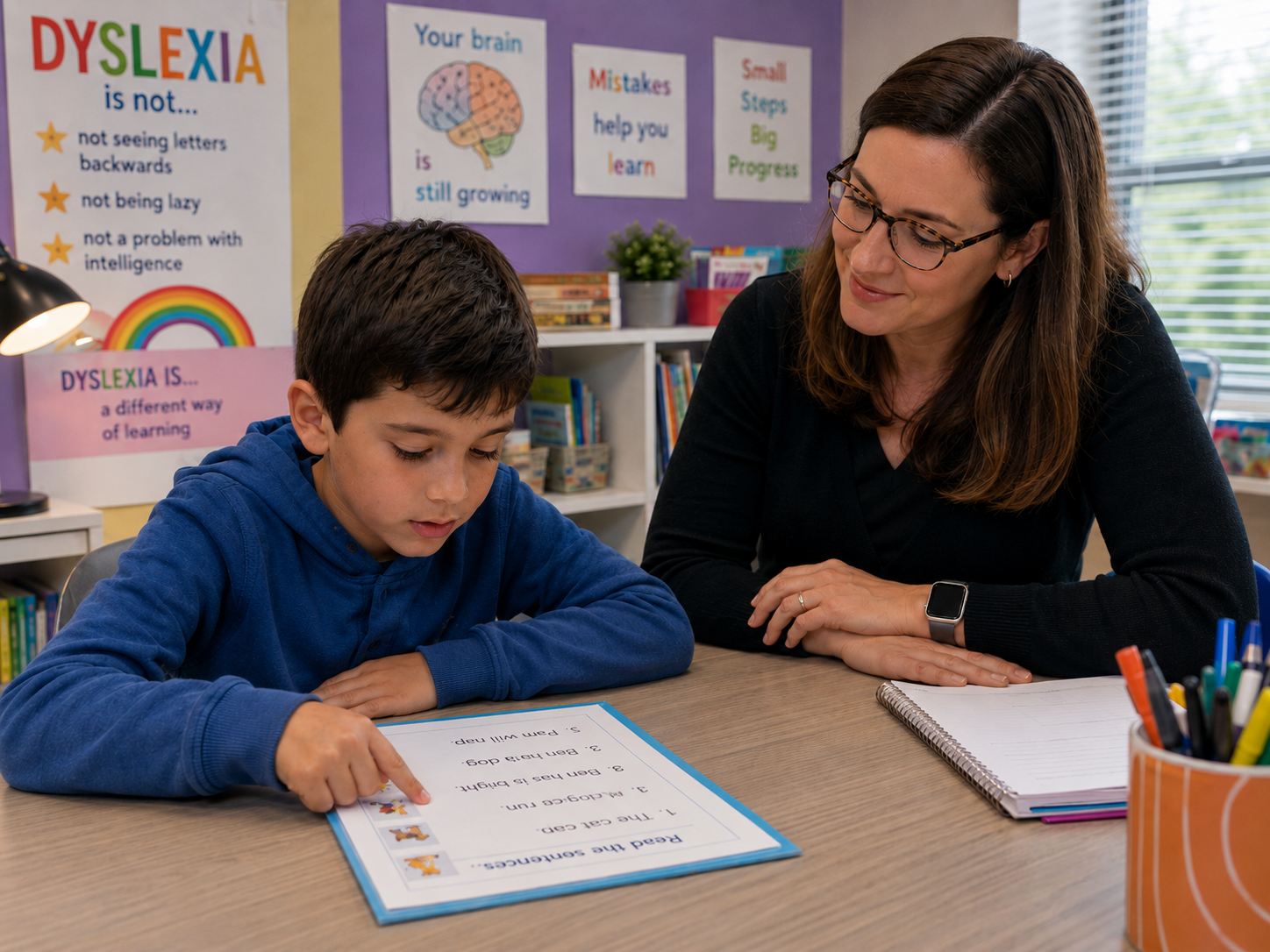
If your child is struggling with reading, spelling, or keeping up in school, a dyslexia evaluation can provide answers. Parents can seek testing through their child's school or a qualified private professional, depending on their needs and timeline.
Not every provider who evaluates reading difficulties has the same training or scope of practice. Knowing where to test for dyslexia means understanding the difference between a screening, reading assessment, and comprehensive evaluation, then matching your child's needs to the right provider.
Why Getting This Right Matters More Than Most Parents Realize
Dyslexia is more common than many people expect. According to New Frontiers (July 2026), dyslexia is estimated to affect between 5% and 20% of the U.S. population, with an average prevalence of around 8.3%. Yet the gap between how many people carry dyslexia characteristics and how many actually receive a formal diagnosis is staggering. Data from Spellings. App (2025) shows that approximately 40 million adults have dyslexia characteristics, but only around 2 million have received formal diagnoses, a 95% gap that points to how often this condition goes unrecognized. The cost of waiting is high. Research from 2025 indicates that learning disability testing washington dc early intervention shows success rates of 90 to 95%, compared to just 45% when intervention is delayed. That difference is significant, and it starts with getting the right evaluation from the right provider at the right time.
Screening vs. a Full Evaluation: Not the Same Thing
Before choosing a provider, understand what type of assessment your child needs. A screening is a brief process used to identify whether a child may be at risk for reading difficulties. Schools and pediatricians may use screeners as a first step. A screening can flag concerns early, but it does not diagnose dyslexia. A full evaluation goes much deeper. It examines your child's reading skills, decoding ability, spelling, sound awareness, reading speed, and often areas like oral language, attention, memory, and writing. A skilled evaluator also reviews your child's developmental history, school records, earlier reading instruction, and family background. The result is a complete written report with findings and practical recommendations, not just a score.
Tutoring and reading instruction are valuable, but they are not evaluations. A quick online quiz cannot diagnose dyslexia either. If you need documentation to support school services, a 504 Plan, or an IEP, you need a formal evaluation from a qualified professional.
Which Professionals Can Evaluate for Dyslexia
Several types of professionals may be qualified to evaluate dyslexia, but their training, licenses, and the scope of what they can assess vary meaningfully.
A school evaluation team typically includes a school psychologist and may involve a special education teacher or speech-language pathologist. The school team evaluates whether a child's difficulties affect their education and whether they qualify for services like an IEP. This is a free option under federal law, and parents can request an evaluation in writing. The limitation is that a school evaluation is focused on educational eligibility, not necessarily on providing a comprehensive clinical picture of all the factors that may contribute to a child's reading difficulties.
A licensed child psychologist or school psychologist in private practice can conduct a comprehensive psychoeducational evaluation that goes beyond school eligibility. This type of assessment typically examines reading, cognitive processing, attention, language, memory, and academic achievement. The resulting report can support school accommodations, 504 Plans, and IEP eligibility, and can also guide tutoring, therapy, or other interventions at home.
A neuropsychologist is often the right choice when a child's concerns are more complex, such as when there are overlapping questions about brain function, medical history, significant attention difficulties, or developmental concerns in addition to reading problems. Neuropsychological evaluations are broader in scope and may be particularly helpful when previous evaluations have not produced clear answers.
A speech-language pathologist with appropriate literacy training can assess oral language, phonological awareness, and early reading skills. This can be valuable for younger children or as part of a broader team evaluation. However, not all speech-language pathologists specialize in dyslexia assessment, so asking about specific training is important.
A reading specialist or dyslexia specialist can assess specific reading and decoding skills and often provide targeted instruction. However, their scope of practice varies by state, and they may not be licensed to conduct the type of comprehensive psychological evaluation needed for school documentation or accommodation requests. Their assessment is often best used alongside, not instead of, a full psychoeducational evaluation.
The key point is that a job title alone does not confirm qualifications. A pediatrician may be a helpful first step to rule out vision or hearing issues and to provide a referral, but a physician is not typically the right professional to identify or diagnose dyslexia.
School Evaluation vs. Private Evaluation: Key Differences
A school evaluation is designed to answer one primary question: does this child qualify for special education services or other school support? The team applies federal and state eligibility criteria, and the outcome is tied to educational decision-making.A private evaluation answers a broader set of questions. It can examine not just reading and learning, but also attention, anxiety, emotional functioning, processing speed, and how all of these factors interact. For families who want a fuller picture, who need documentation for college accommodations or standardized testing accommodations, or who want an independent perspective, a private evaluation is often the better path.
It is important to know that a private diagnosis or report does not automatically guarantee an IEP, a 504 Plan, or any specific school accommodation. Schools review private reports and make their own eligibility decisions. That said, a well-written private evaluation with clear educational recommendations can be a powerful tool in those conversations. If school support is part of your goal, ask any private evaluator whether their report will include specific, actionable recommendations that the school can use.
Families in the Washington, DC area can explore virtual psychoeducational testing washington dc through The Mind Center, which provides comprehensive evaluations with practical recommendations for school, home, and beyond.

What to Look for in a Dyslexia Testing Provider
Choosing the right evaluator starts with knowing what a thorough evaluation should include.
Look for a provider who has specific training and hands-on experience evaluating children for dyslexia and related learning differences. A strong evaluation uses multiple assessment tools, not a single checklist or score. The evaluator should review school records, collect information about your child's developmental and educational history, and gather input from teachers and parents.
The assessment itself should examine word reading, decoding, spelling, reading fluency, phonological awareness, and reading comprehension. Depending on your child's age and concerns, the evaluation may also look at oral language, listening comprehension, writing, memory, processing speed, and attention. A good evaluator also considers whether other factors, such as ADHD, language difficulties, anxiety, or limited access to quality reading instruction, may be contributing to or overlapping with the reading difficulties.
After testing, you should receive a complete written report. The report should explain the findings in language you can actually understand, not just pages of raw scores. It should include specific recommendations for what to do next, whether that means school accommodations, tutoring with a structured literacy approach, therapy, or another type of support. Before making your decision, a qualified evaluation provider can help you understand what contact options and information are available to you.Families who cannot attend in person should ask about virtual options. The Mind Center offers virtual evaluations for eligible clients, though not every assessment can be completed online. A clinician can determine what is appropriate for your child.
Questions to Ask Before You Book
Before committing to an evaluation, ask the provider directly:
What specific training and experience do you have evaluating children for dyslexia? Are you licensed or credentialed to provide the type of evaluation my child needs? Will this be a screening, a reading evaluation, or a comprehensive psychoeducational evaluation? Which reading and language skills will you assess? Will you review school records and prior intervention history? Will your report include clear educational recommendations that I can share with my child's school? Can your documentation support a 504 Plan, IEP, or accommodation request? What happens after the evaluation? Is there a feedback session to explain results?
These questions help you separate providers who do thorough, qualified work from those who offer something much more limited.
Finding the Right Fit in South Florida, Maryland, Virginia, or Washington, DC
Where to test for dyslexia depends partly on where you live and what resources are available to you. The Mind Center for Kids serves families in Washington, DC, Maryland, Virginia including Northern Virginia, and South Florida, covering Palm Beach, Broward, and Miami-Dade counties. With approximately 15 years of experience and more than 5,000 school-based evaluations completed, the practice brings both clinical depth and practical knowledge of how schools, families, and evaluators can work together effectively.
If you are ready to take the next step, reach out directly through The Mind Center for Kids. You can also call or text (561) 888-0102 to ask questions or schedule an evaluation. Getting accurate information early puts you in the best position to help your child move forward with confidence.
Frequently Asked Questions
Q: How do I get medically tested for dyslexia?
Dyslexia is not typically diagnosed through a medical exam; it is identified through a psychoeducational or neuropsychological evaluation conducted by a qualified professional.
A pediatrician can be a helpful first step to rule out vision, hearing, or other medical concerns that might affect reading. After that, a licensed psychologist, school psychologist, or neuropsychologist is generally the right professional to conduct a formal evaluation. You can request a school evaluation through your child's school at no cost, or pursue a private evaluation for a more comprehensive assessment.
Q: What are three warning signs of dyslexia?
Three common warning signs are difficulty sounding out unfamiliar words, frequent spelling errors that do not follow basic patterns, and slow or labored reading even after significant practice.
Younger children may also struggle to recognize rhymes, learn the alphabet, or connect letters to their sounds. Older children might avoid reading aloud, misread words they have seen many times, or take much longer than expected to complete reading assignments. If you notice these patterns persisting over time, an evaluation is worth pursuing rather than waiting to see if the child grows out of it.
Q: How do you get tested for dyslexia?
You can get tested for dyslexia by requesting an evaluation through your child's school or by contacting a qualified private professional such as a licensed psychologist or neuropsychologist.
The school process begins with a written request to the school principal or special education coordinator. For a private evaluation, you contact a practice directly, provide background information, and schedule testing sessions. A thorough evaluation reviews reading skills, language processing, educational history, and other relevant areas before producing a written report with findings and recommendations.
Q: At what age is dyslexia usually diagnosed?
Dyslexia can be identified as early as kindergarten or first grade, though many children are not diagnosed until the third grade or later when reading demands increase significantly.
Earlier identification is strongly associated with better outcomes. If you have concerns about a preschool-age child, a speech-language pathologist with literacy expertise can assess early phonological skills even before formal reading instruction begins.
Q: Where to test for dyslexia in children?
Parents can seek dyslexia testing for children through their school's special education team or through a private provider such as a licensed child psychologist, school psychologist, or neuropsychologist.
The right setting depends on what the family needs from the evaluation. A school evaluation focuses on educational eligibility and is conducted at no cost to the family. A private evaluation typically offers a broader clinical picture and may be better suited when families need documentation for accommodations, want an independent opinion, or have concerns that go beyond reading alone.
The Mind Center serves families in Washington, DC, Maryland, Virginia, and South Florida, offering comprehensive psychoeducational evaluations with clear reports and practical recommendations that parents and schools can actually use.
The Bottom Line on Where to Test for Dyslexia
Finding the right evaluator takes a little research, but it is one of the most important steps you can take for your child. The difference between a screening and a full evaluation, between a school assessment and a private one, and between a reading specialist and a licensed psychologist matters more than most parents initially realize. Asking the right questions before you book, understanding what the report will cover, and knowing how the findings can support your child at school and at home will help you make a confident choice.
If your child is showing signs of reading difficulties and you are ready for real answers, The Mind Center for Kids is here to help. The practice serves families in Washington, DC, Maryland, Virginia including Northern Virginia, and South Florida across Palm Beach, Broward, and Miami-Dade counties, with in-person and virtual options available when appropriate. Call or text (561) 888-0102, or visit themindcenterforkids.com to learn more and take the first step toward clarity.