Yes, you can qualify for college accommodations without an IEP. Colleges do not require a previous Individualized Education Program, a 504 Plan, or any history of special education services before approving disability-related support.
The process works differently than it did in K-12. In college, you take the lead. Your school's disability or accessibility services office reviews your request, considers your documented needs, and decides which accommodations, if any, fit your situation. A prior school plan can be helpful context, but it is not a requirement.
Who this is for: College-bound high school students, current college students, and their parents who are considering a first-time accommodation request and are not sure whether the absence of an IEP or 504 Plan disqualifies them. Not for: Students who already have active college accommodations in place and want to expand them; that process follows a separate renewal or modification path.
Why Students Often Seek College Accommodations for the First Time
Many students arrive at college having never used formal support, even when real learning or attention differences were present throughout their earlier school years. There are several common reasons this happens.
Some students received a recent diagnosis. ADHD, anxiety, depression, dyslexia, and processing disorders are frequently identified in late high school or early adulthood, after a student has already left a system where IEPs and 504 Plans were options.
Others had difficulties that were compensated by smaller class sizes, attentive teachers, or sheer effort. College changes the equation. Longer exams, large lecture halls, faster pacing, and self-directed studying can surface challenges that stayed hidden before.
Some families chose not to pursue a school plan, even when concerns existed. Others attended schools where evaluation backlogs or limited resources meant students never received formal testing. In all of these situations, you still have a path forward.
What Qualifies You for College Accommodations Without a Prior Plan
Colleges operate under the Americans with Disabilities Act (ADA) and Section 504 of the Rehabilitation Act of 1973. Under these federal laws, a student with a disability who is otherwise qualified for the program may be entitled to reasonable accommodations. The legal definition of disability is broader than most people expect. It includes physical, sensory, psychological, and learning-related conditions that substantially limit one or more major life activities.
Conditions that frequently support college accommodation requests include ADHD, specific learning disabilities such as dyslexia, dyscalculia, or dysgraphia, anxiety disorders, depression, autism spectrum disorder, chronic health conditions, and traumatic brain injury, among others. The catch is that good grades alone do not disqualify you. High academic performance does not mean a disability is absent. Many students compensate through significant extra effort or time, and that pattern itself can be relevant to your request.
The college's accessibility office determines eligibility based on your individual needs and the information you provide through the services overview. Approval is never automatic, and a diagnosis alone does not guarantee a specific accommodation. What matters is the connection between your condition, the barriers you face, and the support being requested.
How the Request Process Works: A Practical Walkthrough
Start by identifying your college's disability or accessibility services office. Most schools list this on their website under student services, student affairs, or a similarly labeled section. Contact them directly and ask about their specific intake process and documentation requirements before gathering anything.
Once you know what the office expects, pull together whatever relevant information you already have. This may include a previous psychological or psychoeducational evaluation, medical records, a letter from a treating physician or therapist, or a completed form the college provides to licensed professionals. Your own written description of your difficulties can also be part of the picture at many schools.
Requirements vary significantly from one institution to another. Some schools accept a brief provider letter for certain conditions. Others require a more detailed evaluation report. A few specify that documentation must be recent, though not every school enforces a strict three-year rule for all conditions. Contact the office before paying for new testing. They can tell you exactly what they need, and you may already have enough.
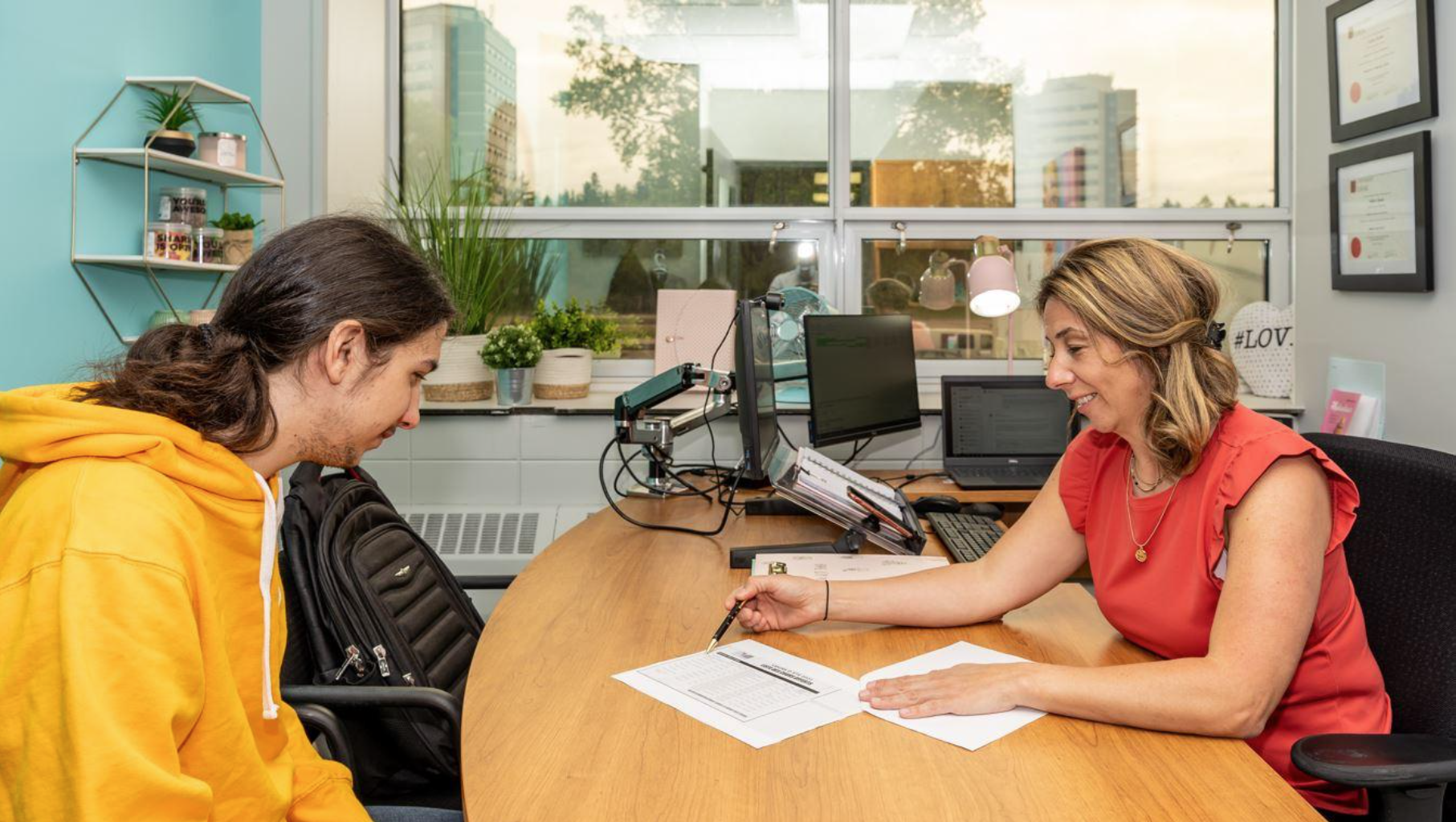
After submitting your request, most schools schedule a meeting between the student and an accessibility coordinator. Come prepared to describe the specific barriers you experience: how long exams take you, what happens in noisy environments, whether reading speed affects your ability to finish assignments. Concrete descriptions help. Vague statements like "I struggle with focus" are less useful than "I consistently run out of time on exams, even when I know the material."
If approved, the office typically issues a formal accommodations letter that you share with individual professors each semester. The trade-off here is that you bear responsibility for this process every term. Unlike K-12, no one automatically tracks it for you.
What Accommodations You Might Request
Extended testing time is the most common accommodation at the college level. Students with ADHD, learning disabilities, anxiety, and processing differences frequently use it. Testing in a reduced-distraction environment is another common option.
Other accommodations that colleges regularly approve include note-taking support, access to lecture recordings, extended time on written assignments, priority seating, accessible course materials in alternate formats, and permission to use assistive technology such as text-to-speech software. Some students request flexibility around attendance for documented health reasons, though approval on this one varies widely by school and by course structure.
The pattern worth noting in practice: students who describe their barriers precisely and tie each request directly to a documented difficulty tend to have smoother conversations with accessibility coordinators than students who present a diagnosis and a general list.
If you are unsure how to frame your request or which accommodations might fit your situation, the college's accessibility office is the right starting point. Asking early is better than waiting. You can also request accommodations after a semester has started, but earlier contact gives the office more time to review and coordinate.
How Parents Can Help Without Taking Over
In college, the student is the client. FERPA (the Family Educational Rights and Privacy Act) generally shifts privacy rights to the student once they turn 18 or enroll in a postsecondary institution, whichever comes first. This means parents are not automatically included in communications with the accessibility office unless the student provides written consent.
That said, parents can play a genuinely useful role behind the scenes. Helping organize existing records, locating previous evaluation reports, or calling a pediatrician to obtain relevant medical letters are all practical contributions that do not require the parent to attend meetings or speak on the student's behalf.
If you are a parent supporting this process, your job shifts from advocate to coach. Prepare your student for the meeting by practicing how to describe their specific challenges. Help them understand what the accommodations letter means and what they need to do with it each semester.
When a New Evaluation May Make Sense
Some students who pursue college accommodations without an IEP find that the documentation they have is sufficient. Others encounter a gap. The college may indicate that existing records are outdated, that the information does not clearly explain current functioning, or that a condition requires more detailed documentation than a provider letter can supply.
In those cases, a comprehensive psychoeducational evaluation can fill the gap. These evaluations assess cognitive functioning, academic achievement, attention, processing, and other areas relevant to learning. The results give the accessibility office a clearer picture of how a student's profile affects day-to-day academic performance.
The services overview at The Mind Center for Kids covers the range of evaluations available, including comprehensive psychoeducational assessments designed to clarify learning and attention concerns in older students and adults. The Mind Center serves families in Washington, DC, Maryland, Virginia (including Northern Virginia), and South Florida across Palm Beach, Broward, and Miami-Dade counties.
For students where ADHD is the primary concern, adhd testing washington dc is one option The Mind Center offers. The practice also provides virtual psychoeducational testing washington dc when this is clinically appropriate and available for the specific service needed. This can be particularly helpful for students already living on campus or for families managing complex schedules.
The honest trade-off with new testing: it takes time and carries a cost. It is not always necessary. Confirm what the accessibility office needs before committing to a full evaluation. However, when existing information genuinely does not explain the student's current struggles, a clear evaluation report can make the difference between a request that moves forward and one that stalls.
A brief look at the full services The Mind Center offers can help you determine whether a focused evaluation or a broader assessment better fits your situation before scheduling a consultation.
Frequently Asked Questions
Q: Do colleges have to accommodate IEPs?
Colleges are not required to honor or continue an IEP, but they are required under federal law to provide reasonable accommodations to eligible students with disabilities.
An IEP is a K-12 document created under the Individuals with Disabilities Education Act (IDEA), and IDEA does not extend to higher education. Once a student enrolls in college, the legal framework shifts to the ADA and Section 504 of the Rehabilitation Act. This means the college has its own process for determining what support is appropriate, and a previous IEP does not automatically transfer. That said, an IEP can be useful documentation when you submit your first-time college accommodation request, since it provides a record of prior evaluations, identified needs, and services that were considered appropriate.
Q: Do colleges have to accommodate IEPs?
No, colleges do not carry forward IEP obligations, but they must still evaluate whether a student qualifies for accommodations under the ADA and Section 504.
The distinction matters practically. In K-12, the school is responsible for identifying students who need support and developing a plan. In college, that responsibility shifts to the student. You must self-identify, contact the accessibility office, and follow the school's intake process. Bringing your IEP to that meeting gives the coordinator useful background, but the college will make its own determination about what accommodations, if any, are reasonable and appropriate for your documented needs in the college setting.
Q: What conditions make you eligible for college accommodations?
Any condition that substantially limits one or more major life activities may make you eligible for college accommodations under the ADA.
This includes a wide range of physical, psychological, sensory, and learning-related conditions. ADHD, specific learning disabilities, autism spectrum disorder, anxiety, depression, PTSD, chronic illness, traumatic brain injury, and hearing or vision impairments are among the conditions that commonly support accommodation requests at the college level. Eligibility is not determined by diagnosis alone. The accessibility office looks at how the condition affects your functioning in an academic setting and whether the requested support addresses those documented barriers. Strong grades do not disqualify you. A student who earns A's while spending three times as long on exams as their peers may have a legitimate and well-supported case.
Q: Can you get 504 accommodations in college?
The term "504 accommodations" is often used informally, but in college the legal basis for accommodations is Section 504 of the Rehabilitation Act and the ADA, not a K-12 504 Plan.
A 504 Plan from middle or high school does not automatically continue in college, but the underlying law does apply. Colleges that receive federal funding, which includes the vast majority of four-year and two-year institutions in the United States, are required under Section 504 to provide reasonable accommodations to otherwise qualified students with disabilities. The process looks different from what you experienced in high school. You contact the accessibility office directly, submit documentation, and participate in a review meeting. If you had a 504 Plan before college, bring it along with any supporting evaluations. It can support your request even though the plan itself does not transfer.
Q: What ADHD accommodations can I ask for at college?
Students with ADHD commonly request extended testing time, a reduced-distraction testing environment, permission to use organizational tools, and note-taking support, though approval depends on your individual documentation.
Other accommodations that accessibility offices sometimes approve for students with ADHD include access to recorded lectures, priority seating closer to the front of large classrooms, extended deadlines for specific assignment types, and permission to use text-to-speech software or other assistive technology. The key is connecting each request to a specific barrier. If you run out of time on exams because your attention fluctuates under timed pressure, say that clearly in your request. If a noisy testing hall makes it impossible to concentrate, describe what happens and how it affects your performance. For students where ADHD testing is a next step, The Mind Center for Kids offers evaluations for children, teenagers, and adults across Washington, DC, Maryland, Virginia, and South Florida. You can reach the practice by phone or text at (561) 888-0102.
The Bottom Line on College Accommodations Without an IEP
Qualifying for college accommodations without an IEP is not only possible, it is more common than most students realize. The absence of a prior school plan does not close the door. Federal law focuses on your current disability-related needs, not your K-12 history. What matters is whether you can document a condition that substantially limits your functioning and connect that documentation to a specific, reasonable request.
Start by contacting your college's disability or accessibility services office. Ask what they need before gathering documents or scheduling any testing. If a documentation gap becomes clear, a psychoeducational evaluation from a qualified provider can give the accessibility office a detailed, current picture of your learning profile and support needs. Need help understanding whether an evaluation could support a college accommodation request? Schedule a consultation with The Mind Center for Kids to discuss your concerns and the college's documentation requirements. The practice serves families in Washington, DC, Maryland, Virginia including Northern Virginia, and South Florida across Palm Beach, Broward, and Miami-Dade counties. Call or text (561) 888-0102 to get started.