How Anxiety and Academic Performance Are Connected in Children and Teens
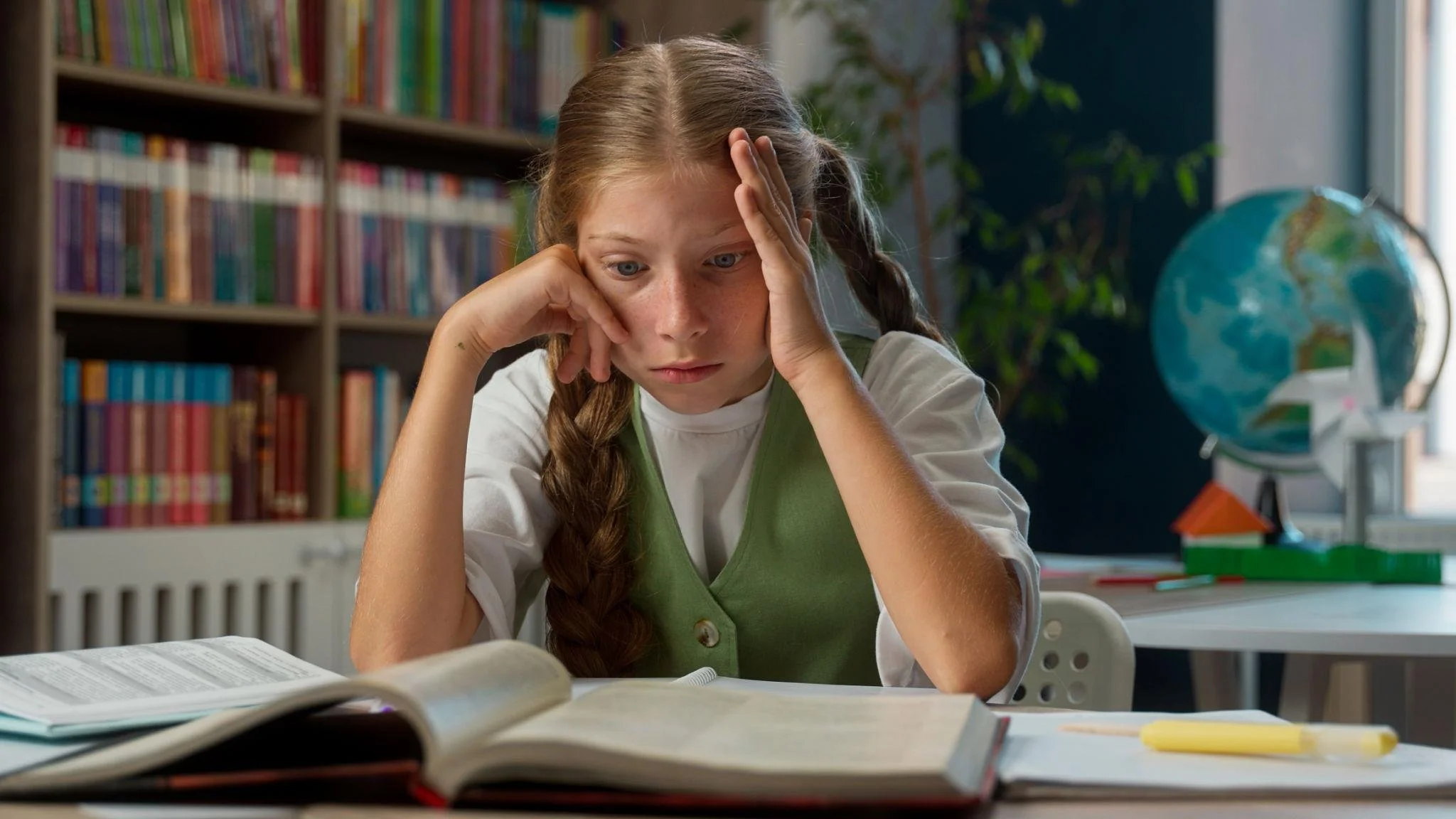
Anxiety and academic performance are closely linked. Anxiety can make it harder for some children to focus, remember information, take tests, finish assignments, or even show up to school. At the same time, ongoing school struggles can increase a child's anxiety, creating a cycle that is difficult to break without the right support.
This article is written for parents and educators who want to understand that connection and know what to look for. It is also worth knowing that anxiety does not always look like poor grades. Some children keep their grades up while quietly struggling with perfectionism, excessive worry, or a deep fear of making mistakes.
How Anxiety Can Get in the Way of Learning
Anxiety affects the brain in ways that directly interfere with learning. When a child feels anxious, their brain shifts into a kind of alert mode. That shift is useful in genuine danger, but in a classroom, it can crowd out the thinking needed for schoolwork.
Here are some of the ways anxiety may affect learning and school life:
Concentration can suffer when a child's mind is caught up in worry. A student may sit in class and look like they are paying attention, while mentally they are replaying a mistake, fearing what might go wrong next, or mentally rehearsing a social situation.
Memory is also affected. Anxiety can make it harder to absorb new information and even harder to recall what was already learned, especially under pressure. This is a common reason some students freeze during tests or presentations, even when they studied well.
Starting and finishing assignments can be difficult for anxious children. Fear of getting something wrong can cause a student to put off beginning a task, or to go over it repeatedly without ever feeling satisfied with it. This shows up as procrastination, but the cause is often fear rather than laziness.
Homework routines may become a source of daily conflict. A child who is managing anxiety may spend two or three hours on work that should take thirty minutes, or become very upset over small errors.
School attendance is another area where anxiety and school performance intersect. Some children begin avoiding school entirely, often starting with individual classes, presentations, or tests that feel too overwhelming. Stomachaches and headaches that appear on school mornings are a common sign parents and school staff may notice.
Participation in class can drop. A student who knows the answer may stay silent because the fear of saying something wrong, being laughed at, or drawing attention feels too large.
Sleep, energy, and overall readiness to learn are also affected. Anxious children often have trouble sleeping, which makes it harder to concentrate and regulate emotions the next day.
When Worry Is Normal and When It May Need More Attention
It is completely normal for children and teens to feel nervous before a test, a presentation, or a new school year. That kind of temporary worry is not a concern. Anxiety may deserve more attention when it becomes frequent, lasts over time, feels intense, and starts getting in the way of school or daily life.
The pattern matters more than a single moment of worry. If a child is frequently anxious, is avoiding more and more situations, or is visibly distressed on most school days, that is a pattern worth discussing with a professional.
Signs Parents and Educators May Notice
Some signs may show up at home, others at school, and many in both places. A sudden drop in grades is one obvious signal, but there are others that are easier to miss.
A child may ask for reassurance repeatedly, checking whether an assignment is right, whether they are in trouble, or whether something bad will happen. They may become very upset about small mistakes that other children would brush off. They may shut down, cry, or become irritable when faced with a difficult task.
Refusing to participate in class despite clearly knowing the material, avoiding subjects or teachers without explanation, or frequently visiting the school nurse are also signs worth noting.
It is important not to assume that these signs point only to anxiety. Similar difficulties can be connected to ADHD, learning differences such as dyslexia, depression, sleep problems, trauma, autism, or other concerns. Overlapping issues are also common. A child can have anxiety alongside a learning disability, or ADHD alongside anxiety, and each concern may need its own form of support. This is exactly why virtual psychoeducational testing washington dc and in-person evaluations can be so valuable when the picture is unclear.

Practical Steps for Parents and Educators
There is a lot that parents and educators can do before, during, and after professional support is involved.
Start by listening without dismissing the child's worries. A response like "you will be fine" may feel reassuring to an adult, but it can leave a child feeling unheard. Asking "what part of school feels the hardest right now?" opens a more useful conversation.
Look for patterns. Does the anxiety spike around tests? Around a specific subject? Around social situations or transitions? Identifying triggers makes it easier to problem-solve.
Breaking large assignments into smaller steps can reduce the sense of overwhelm. A book report becomes more manageable when it is broken into choosing a book, reading it section by section, drafting an outline, and writing one paragraph at a time.
Predictable routines help anxious children feel more in control. Knowing what to expect at home in the evenings and at school during the day lowers the unpredictability that feeds worry.
Praising effort and progress rather than perfection sends an important message to children who fear mistakes. "You worked really hard on that" is more helpful than "you got a perfect score."
Breathing exercises and simple mindfulness strategies may help some children manage a stressful moment, but they should not be treated as a cure or a replacement for professional support. They are tools, not treatments.
Communicating with the child's teacher or school counselor is also a practical step. Schools often have support resources that parents are not aware of until they ask.
When a Professional Evaluation May Help
Sometimes it is genuinely difficult to know what is driving a child's school struggles. Is it anxiety? ADHD? A learning difference? A combination? This is one of the most common questions parents bring to professionals, and it is a fair one.
A psychoeducational evaluation can help clarify the picture. These evaluations look at cognitive ability, academic achievement, attention, processing, and emotional functioning. The results can help families and schools understand what is happening and decide on next steps. Those steps might include therapy, school accommodations, or both.
That said, not every child who experiences anxiety needs a formal evaluation. A conversation with a pediatrician or therapist may be the right starting point for some families. For others, speaking directly with the school is the first step.
For families considering college testing washington dc for older students who need documentation for standardized testing accommodations, a formal evaluation may be a necessary part of that process.
How The Mind Center for Kids Can Help
The Mind Center for Kids supports children, teenagers, parents, and schools through therapy, psychological services, and comprehensive psychoeducational evaluations. With approximately 15 years of experience and more than 5,000 school-based evaluations completed, the practice is well equipped to help families figure out what is going on and what to do next.
The Mind Center serves families in Washington, DC, Maryland, Virginia (including Northern Virginia), and South Florida, including Palm Beach, Broward, and Miami-Dade counties. Both in-person and virtual options may be available depending on the service and what is clinically appropriate. You can explore the full range of services on the website to see what may fit your child's needs.
If you are unsure whether your child's school difficulties relate to anxiety, attention, a learning difference, or something else entirely, The Mind Center can help you talk through an appropriate next step. To get started, visit the contact page, call or text (561) 888-0102, or submit the website contact form.
Frequently Asked Questions
Q: What is the 3-3-3 rule of anxiety?
The 3-3-3 rule is a simple grounding technique that asks you to name 3 things you can see, 3 sounds you can hear, and then move 3 parts of your body.
It is used to help bring attention back to the present moment during anxious feelings. It is not a treatment, but it can be a useful tool for children and teens to use in stressful moments at school or at home.
Q: How to deal with academic anxiety?
Start by identifying what is triggering the anxiety, then break tasks into smaller steps, build consistent routines, and seek professional support if anxiety continues to interfere with school or daily life.
For children, it also helps when parents and teachers respond with patience and curiosity rather than pressure. A therapist can provide more targeted strategies when anxiety is frequent or intense.
Q: How to deal with anxiety at school as a teenager?
Teens can start by talking to a trusted adult, using simple coping strategies like slow breathing, and communicating with a school counselor about what they are experiencing.
Avoiding anxiety-provoking situations often makes anxiety stronger over time. Gradual, supported exposure to difficult situations tends to be more effective than avoidance. Professional support from a therapist trained in working with teenagers can make a significant difference.
Q: What age does anxiety peak?
Research generally suggests that anxiety tends to peak during adolescence, though anxiety can appear at any age, including early childhood.
Middle school and high school years often bring increased academic pressure, social complexity, and identity questions, all of which can heighten anxiety. Early support tends to lead to better outcomes, so there is no need to wait for a child to "grow out of it."
Q: What is the #1 worst habit for anxiety?
Avoidance is widely considered the most counterproductive habit for anxiety, because it provides short-term relief while making anxiety stronger in the long run.
When a child avoids a test, a class, or a social situation because it feels too overwhelming, the fear of that situation tends to grow rather than shrink. Gradual, supported engagement is generally more effective than avoiding the things that feel difficult.
Taking the Next Step on Anxiety and Academic Performance
If anxiety is making school harder for your child, you do not have to sort it out alone. Understanding the connection between anxiety and academic performance is an important first step, but getting the right support makes the real difference.
Whether your child needs therapy, a psychoeducational evaluation, school communication strategies, or simply a clearer picture of what is going on, The Mind Center for Kids is here to help. Reach out today by calling or texting (561) 888-0102, visiting the website at themindcenterforkids.com, or submitting a contact form to discuss the next appropriate step for your child.