Dysgraphia Testing: What Parents Need to Know

Dysgraphia testing is not a single handwriting test. It is a thorough evaluation that examines different writing skills and the possible reasons writing is difficult for your child. If your child struggles to get words on paper, understanding what an evaluation actually involves can help you take the right next step with confidence.
What Dysgraphia Actually Affects
Many parents assume that messy handwriting is the main sign of dysgraphia. In reality, dysgraphia can affect several different areas of written communication, and messy handwriting alone does not confirm that a child has it.
Dysgraphia may affect how quickly a child can write, how readable their letters are, and how well they form and space letters on a page. It can also affect spelling, sentence construction, and writing fluency, which refers to how smoothly and efficiently a child can produce written text. Some children with dysgraphia struggle to organize their thoughts on paper even when they can explain the same ideas clearly out loud. Others find the physical act of writing uncomfortable or tiring.
Because writing involves so many different skills working together, a good evaluation looks at all of these areas rather than one in isolation. For a broader look at how this learning difference shows up in everyday life, the article on dysgraphia in children covers practical signs and real-world examples worth reading before you pursue an evaluation.
When Testing May Be Worth Considering
You do not need to wait until your child is failing a class to seek an evaluation. There are specific patterns that suggest a closer look may be helpful.
Testing may be worth considering when writing is consistently slow or very difficult to read, or when your child's written work does not reflect what they can clearly explain in a conversation. Spelling that remains difficult despite solid instruction at school is another signal worth taking seriously. If your child struggles to organize ideas on paper, becomes unusually frustrated during writing tasks, or mentions physical discomfort like hand pain while writing, these are signs that something more than reluctance may be going on.
It is important to remember that these signs can have several different causes. They point toward the need for a professional evaluation, not toward a specific diagnosis. Online quizzes may help you notice possible concerns, but they cannot diagnose dysgraphia. A real evaluation must draw on several sources of information and be conducted by a qualified professional.
What a Dysgraphia Evaluation May Include
A thorough evaluation is not a single sitting with one task. It typically involves several components gathered across a session or more, depending on your child's needs.
The process often begins with a parent interview, where the evaluator asks about your child's history, development, school experience, and the specific concerns you have noticed at home. School records and writing samples are usually reviewed as well. When possible, input from your child's teacher provides important context about how writing difficulties appear in the classroom setting.
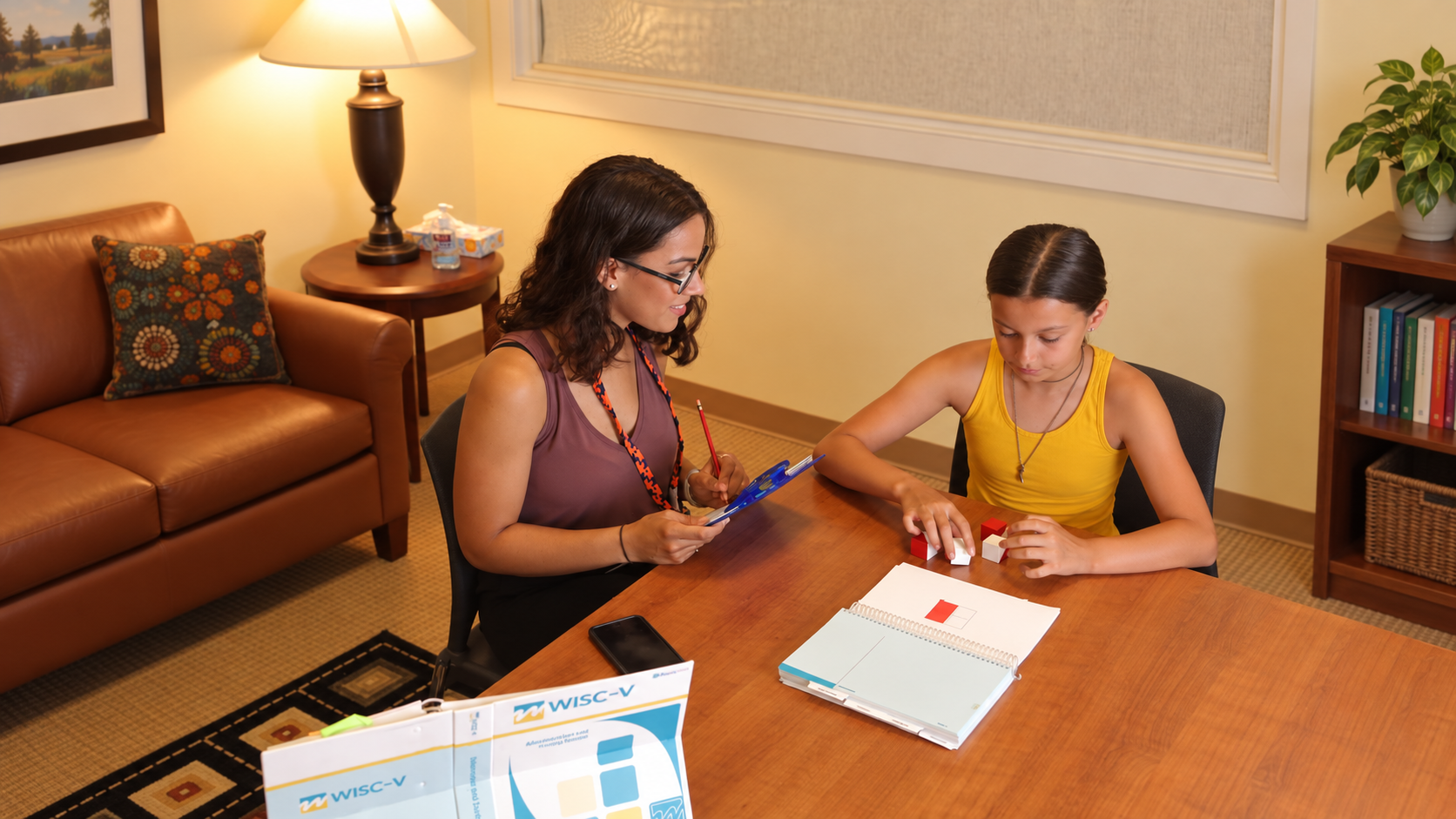
From there, the evaluator uses standardized tests of writing and academic achievement to measure different skills in a structured way. These may include tasks that look at how your child writes sentences, organizes paragraphs, spells words, and copies text. The evaluator also observes how your child approaches writing tasks, including how they hold their pencil, how long they take, and what strategies they use when they get stuck.
Depending on what emerges, the evaluator may also assess related areas such as attention, working memory, processing speed, language, reading, fine-motor skills, and visual-motor integration. Not every child needs every assessment. A skilled evaluator selects the tools that best match what your child is experiencing.
At the end of the process, you receive a written report with clear findings and practical recommendations, followed by a feedback meeting where you can ask questions and discuss next steps.
Who Provides Dysgraphia Testing
Several types of professionals can be involved in evaluating writing difficulties, and their roles are different.
A licensed psychologist or neuropsychologist can evaluate learning, written expression, attention, and processing skills as part of a comprehensive psychoeducational evaluation. This type of evaluation gives you a full picture of how your child thinks, learns, and processes information. A school psychologist performs a similar role within the school system, though with a focus specifically on educational eligibility.
An occupational therapist may assess handwriting mechanics, fine-motor skills, and visual-motor concerns. This is a valuable type of evaluation, but an occupational therapy assessment is not the same as a complete learning disability testing washington dc. If you need documentation for school accommodations or a formal diagnosis, a psychoeducational evaluation from a licensed psychologist is typically required.
When language concerns are present alongside writing difficulties, a speech-language professional may also be involved.
School Testing Versus Private Testing
Your child's school may offer a free evaluation if you make a written request and the school determines that one is warranted. School evaluations focus on whether your child qualifies for special education services or a 504 Plan under federal guidelines. The team looks at educational need, which is a specific standard under U.S. education law.
A private psychoeducational evaluation tends to provide a broader picture. It can assess writing, attention, processing, and other learning areas in more depth, and it is not constrained by the same eligibility criteria the school uses. Families often choose private testing when they want a more complete understanding of their child's profile, when they need documentation for accommodations outside of school, or when the school evaluation did not fully answer their questions.
One important point: a diagnosis from a private evaluator does not automatically guarantee an IEP, a 504 Plan, or any specific school accommodation. The school team reviews the findings and makes its own eligibility decisions based on educational impact. However, a thorough private report with clear recommendations gives the school team solid information to work with.
For families in the Washington, DC area, comprehensive evaluations are available through The Mind Center for Kids, which serves families in DC, Maryland, and Virginia, including Northern Virginia.
How The Mind Center for Kids Can Help
The Mind Center for Kids has approximately 15 years of experience working with parents, students, and schools, and has completed more than 5,000 school-based evaluations. The practice provides comprehensive psychoeducational evaluations that assess written expression alongside attention, reading, processing, and other learning areas when relevant.
Reports from The Mind Center are written to be clear and easy to understand. Recommendations are practical and actionable, designed to be used by parents and educators right away. The practice has experience supporting IEPs, 504 Plans, school interventions, and a range of academic accommodations, including those needed for standardized testing and college applications.
The Mind Center serves families in Washington, DC; Maryland; Virginia, including Northern Virginia; and South Florida, covering Palm Beach, Broward, and Miami-Dade counties. In-person evaluations are available, and virtual psychoeducational testing washington dc may be appropriate in some cases for families who want to explore whether this option is the right fit for their situation.
If you are ready to take the next step, you can reach the team by calling or texting (561) 888-0102, or by visiting the contact page on the website.
Frequently Asked Questions
Q: What are 5 dysgraphia symptoms?
Dysgraphia can show up as slow or labored handwriting, poorly formed or inconsistently sized letters, unusual pencil grip, difficulty spelling, and trouble organizing written ideas despite being able to express them verbally.
These symptoms often appear together, though the specific combination varies from child to child. A professional evaluation is the only way to determine whether these signs reflect dysgraphia or another underlying concern.
Q: Who can diagnose my child with dysgraphia?
A licensed psychologist or neuropsychologist can diagnose dysgraphia as part of a comprehensive psychoeducational evaluation.
A school psychologist can assess writing difficulties in the context of educational eligibility. An occupational therapist can evaluate fine-motor and handwriting concerns but typically does not provide a formal learning disability diagnosis.
Q: At what age is dysgraphia typically diagnosed?
Dysgraphia is most commonly identified during the elementary school years, when formal writing instruction begins and difficulties become more apparent.
Some children are not identified until middle or high school, especially if they have strong verbal skills that mask their written expression challenges. Early identification generally allows for earlier support.
Q: How much does a dysgraphia test cost?
The cost of a private dysgraphia evaluation varies depending on the scope of the assessment and the provider, but comprehensive psychoeducational evaluations typically range from several hundred to several thousand dollars.
Some insurance plans cover portions of psychological testing; it is worth contacting your insurer directly. School-based evaluations are provided at no cost to families when the school determines that one is warranted.
Q: How do I get my child assessed for dysgraphia?
You can start by speaking with your child's teacher or pediatrician, then make a written request to the school or contact a private psychologist to schedule an evaluation.
The Bottom Line of Dysgraphia Testing
If you choose private testing, look for a licensed psychologist experienced in learning disabilities and written expression. The Mind Center for Kids serves families across Washington, DC, Maryland, Virginia, and South Florida and can help you understand what the evaluation process involves before you commit.