Remote Psychoeducational Evaluations for Schools: What School Leaders Need to Know in 2026
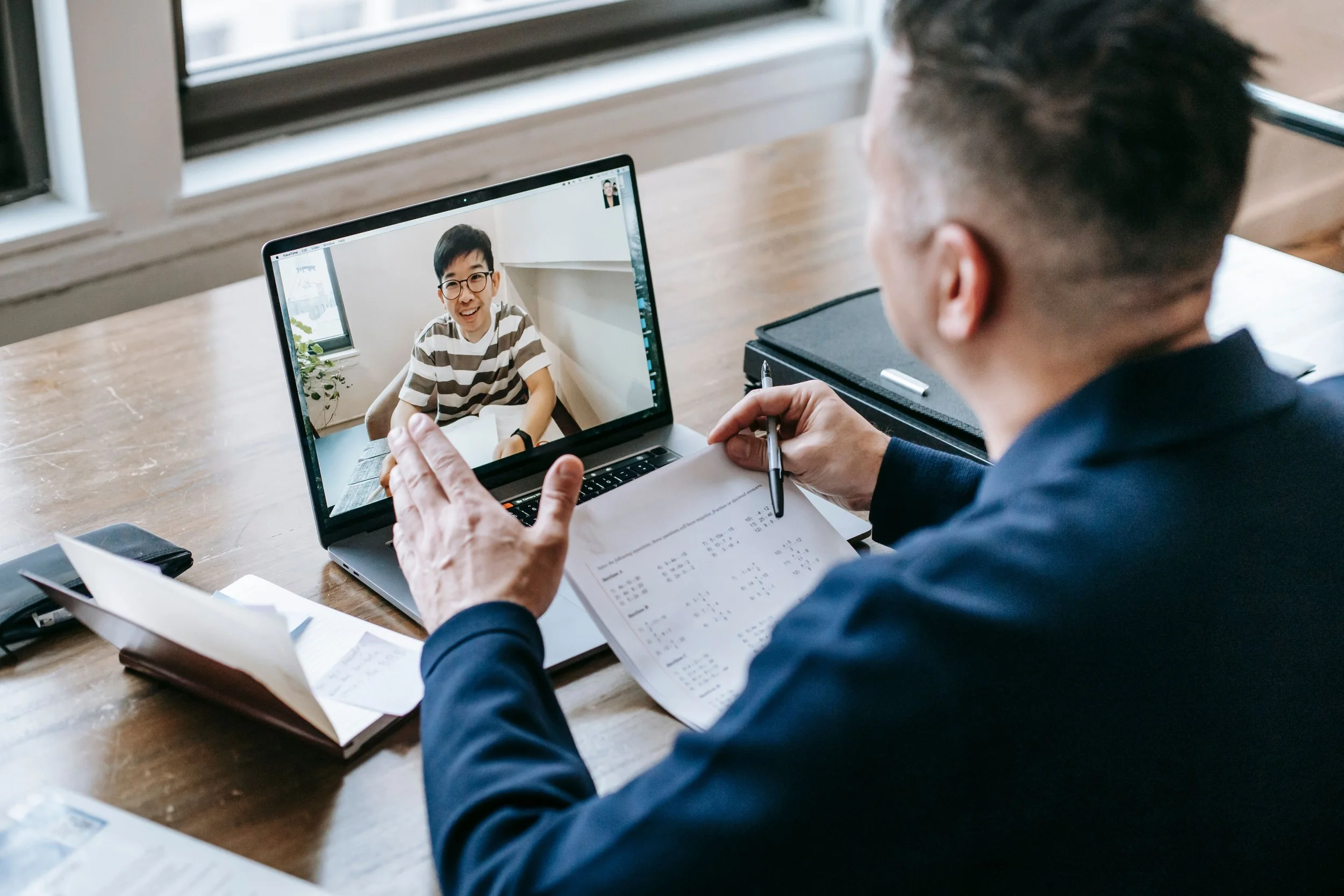
Remote psychoeducational evaluations for schools allow a qualified evaluator to complete appropriate parts of a student's assessment through secure video and online testing tools. The process may include interviews, record reviews, rating forms, supervised testing, observations, and a written report that meets the same professional and ethical standards as an in-person evaluation.
If your school is managing a growing caseload, a staffing gap, or evaluation deadlines that are hard to meet, bringing in an outside provider through a remote or hybrid model may be one practical option worth exploring. Understanding how the process works, what your school team needs to prepare, and where responsibilities begin and end will help you make an informed decision.
What Remote Psychoeducational Evaluations Actually Involve
A psychoeducational evaluation is not a single test. It is a process that pulls together information from multiple sources to build a clear picture of a student's strengths, challenges, and educational needs. Depending on the referral question and the student's individual situation, an evaluation may look at cognitive abilities, academic achievement, reading and writing skills, math skills, attention and executive functioning, social and emotional functioning, adaptive or everyday living skills, developmental concerns, and autism-related concerns.
Remote delivery means that some or all of these components are completed through secure technology rather than in person. An evaluator may conduct parent and teacher interviews by video, administer certain cognitive or achievement measures through an approved online platform, review school records digitally, and collect behavior rating scales through secure online forms. The written report and any eligibility or IEP meeting participation can also happen remotely when that is included in the agreement.
What is important to understand is that not every test and not every student is well-suited for remote assessment. A remote evaluation should always be based on the individual student's needs, and virtual psycho educational testing requires careful attention to whether the format will produce valid results. Some evaluations may combine remote and in-person components, which is commonly called a hybrid approach. If testing conditions are poor or a student cannot participate meaningfully online, the evaluator should recommend an in-person or hybrid alternative rather than pushing forward with a format that may not yield valid results.
The school's eligibility and IEP team remains responsible for educational decisions. An outside evaluator can support the process with objective findings and practical recommendations, but the school retains its legal responsibilities under IDEA and other applicable regulations.
How the School Process Works Step by Step
The process begins before a single test is administered. The school or district coordinator and the outside provider need to have a detailed conversation about caseload needs, referral questions, available records, timelines, and any jurisdiction-specific requirements. After that initial discussion, the school completes its required referral and parent-consent procedures according to district policy. Nothing moves forward without appropriate consent in place.
Once consent is obtained, the evaluator reviews school records, previous interventions, and any prior testing that is available. This records review shapes what areas the evaluation should address and helps the evaluator determine whether remote testing is appropriate for the specific student. The evaluator then gathers information from parents, teachers, and other school professionals through interviews and rating forms.
If remote testing is determined to be suitable, the school prepares the technology, testing space, schedule, and onsite support before the first testing session begins. The evaluator completes appropriate testing and observations, then reviews all gathered information together before writing the report. A clear report with findings and practical recommendations is delivered to the school team. When included in the service agreement, the evaluator may also attend an eligibility or IEP meeting to answer questions and clarify findings.
Procedures will vary depending on the school, the jurisdiction, the referral question, and the student. Do not assume that every provider follows an identical workflow. It is worth asking detailed questions before services begin.
Roles and Responsibilities During a Remote Evaluation
One of the most important things to sort out before a remote evaluation begins is who is responsible for what. When roles are unclear, testing sessions can be delayed, standardized procedures can be compromised, and the results may not hold up to scrutiny during an eligibility meeting.
The school or district coordinator is typically responsible for managing referrals, securing parent consent, providing records, and coordinating scheduling. The remote evaluator is responsible for determining what testing is appropriate, administering assessments according to publisher and professional standards, integrating all data sources, and writing the report. Teachers and parents contribute important information through rating scales, interviews, and their knowledge of the student's daily functioning.
The onsite facilitator plays a specific and limited role that is easy to misunderstand. This person, usually a school staff member, helps prepare the testing room, positions the technology correctly, manages any physical materials that need to be handed to the student, confirms that the testing environment is appropriate, and provides approved support if the student needs a break or has an urgent need. The facilitator must not explain answers, coach the student, or alter standardized testing procedures in any way. Doing so would compromise the integrity of the results.
School technology staff help confirm that the devices, internet connection, and approved platforms are ready before testing begins. Having a clear backup plan for technology problems is not optional. A session interrupted by a dropped connection or a platform failure can affect a student's performance and may require rescheduling.
For schools looking for a provider that understands these responsibilities clearly, The Mind Center for Kids brings approximately 15 years of experience working with parents, students, and schools, with more than 5,000 school-based evaluations completed. Their team is familiar with the coordination demands that school leaders face, including evaluation backlogs, staffing shortages, and compliance deadlines.

Deciding Whether Remote Testing Is Appropriate for a Student
Not every student is a good candidate for remote psychoeducational testing. Schools and evaluators should think carefully about several factors before scheduling a remote session. The student's age and developmental level matter. Very young children or students with significant attention challenges may not be able to maintain focus through a video-based session long enough to produce valid results.
Communication, language, sensory, or motor needs may also affect whether remote administration is feasible. A student with significant hearing concerns, vision impairment, or motor difficulties may need specialized accommodations that are harder to provide remotely. Required accommodations should be reviewed in advance to confirm they can be implemented properly through the chosen platform and with the onsite facilitator available.
Access to appropriate technology is another practical consideration. The student needs a suitable computer with a stable internet connection, a quiet and private testing space, and an available facilitator. If any of these pieces are missing, the evaluation should be rescheduled or moved to an in-person format. Finally, the evaluator must confirm that the specific assessments being used have been approved for remote administration by their publishers and that remote delivery is consistent with professional and ethical standards.
Technology, Privacy, and Test Security Considerations
Technology choices affect more than just connection quality. They affect student privacy, data security, and the legal defensibility of the evaluation process. Before remote services begin, school leaders should confirm that the platforms being used meet district technology policies and that appropriate data-sharing agreements are in place between the school and the outside provider.
FERPA applies to student education records, and how that intersects with the platforms and providers involved in a remote evaluation is something your district's legal, privacy, and technology teams need to review. Do not assume that a video platform is automatically compliant just because it is widely used in education. Compliance depends on how the platform is configured, what agreements are in place, and how data is handled throughout the process.
Test security is equally important. Testing materials must be handled securely both by the evaluator and by anyone at the school site. Screen-sharing protocols, physical test materials, and digital results all need to be protected. The evaluator should be able to explain their test security procedures before the engagement begins.
Reports and testing information should only be accessed by individuals with a legitimate educational interest, consistent with FERPA requirements and district policy. Confirm in writing who will receive the report, how it will be transmitted, and how long records will be retained.
For schools that want to learn more about how a provider structures this process, exploring available services in advance gives decision-makers a clearer picture of what is included, what technology is used, and what security practices are in place. Providers who offer virtual psycho educational testing through a clear and established process make the coordination demands on your school team considerably lighter.
Clarifying Turnaround Time Before Services Begin
Turnaround time is one of the most common points of confusion between schools and outside providers. Before services begin, both parties should agree in writing on exactly how turnaround is defined and measured. Does the clock start after parent consent is received, after records are delivered to the evaluator, or after the last testing session is completed? Does the agreed timeline refer to a draft report, a final report, or a report that is ready for an eligibility meeting?
Schools operating under evaluation timelines established by IDEA and state regulations need these answers clearly stated upfront. An outside provider who cannot give you specific, written answers about turnaround expectations is a provider worth asking harder questions before signing any agreement.
Frequently Asked Questions
Q: Can a psych eval be done virtually?
Yes, certain components of a psychoeducational evaluation can be completed virtually when the student, technology, and testing conditions are appropriate.
Not every evaluation or every student is suited for a fully remote format. Some assessments have been approved by their publishers for remote administration, while others have not. In cases where remote delivery is not appropriate for all components, a hybrid approach that combines virtual and in-person sessions may be the right solution. The evaluator should make this determination based on the individual student's needs, age, developmental level, and available supports, not simply on convenience or scheduling preference.
Q: Who can perform a psychoeducational evaluation?
A psychoeducational evaluation must be conducted by a qualified professional, typically a licensed school psychologist, licensed psychologist, or other credentialed specialist depending on state requirements.
For school-based evaluations, a licensed school psychologist is most commonly responsible for the assessment. In some jurisdictions, licensed educational psychologists or licensed clinical psychologists with appropriate training and credentials may also conduct psychoeducational evaluations. Requirements vary by state, so schools should confirm that any outside provider holds the credentials required in their specific jurisdiction. The Mind Center for Kids employs qualified professionals with approximately 15 years of experience completing school-based evaluations across Washington DC, Maryland, Virginia, and South Florida.
Q: Are there any NASP approved online programs?
The National Association of School Psychologists (NASP) approves graduate-level training programs in school psychology, not individual online testing platforms or remote evaluation services.
NASP's approval process applies to university and college programs that train school psychologists. If you are asking whether a school psychology training program is available in an online or hybrid format, NASP does approve programs that include distance learning components, and a current list is available directly through the NASP website. If your question relates to whether a specific testing platform or remote evaluation service carries NASP approval, that is not a designation NASP awards. Schools should instead verify that any remote evaluation service follows NASP's professional standards, ethical guidelines, and practice model for psychoeducational assessment.
Q: Do school psychs make more than teachers?
In most parts of the United States, school psychologists earn higher salaries than classroom teachers, reflecting the additional graduate-level training and licensure requirements the role demands.
According to data from the U.S. Bureau of Labor Statistics, school psychologists fall under a broader occupational category that generally reports median annual earnings above those of elementary and secondary school teachers, though exact figures vary by state, district, and years of experience. School psychologists typically hold specialist-level or doctoral-level degrees and must meet state licensure requirements that go beyond a standard teaching credential. For districts managing tight budgets alongside growing evaluation caseloads, contracting with an outside provider for school-based evaluations can offer a flexible and cost-effective alternative to hiring a full-time staff psychologist.
Q: How much does it cost to get a psychoeducational evaluation?
The cost of a psychoeducational evaluation varies widely depending on the provider, the scope of the evaluation, the geographic area, and whether the evaluation is conducted through a school, a private practice, or an outside contractor.
Private psychoeducational evaluations in the United States can range from approximately $1,500 to $5,000 or more depending on the complexity of the referral question, the number of assessment areas included, and the experience level of the evaluator. School-based evaluations completed through a district's own staff are provided at no cost to families under IDEA when the student is suspected of having a disability. When a school contracts with an outside provider such as The Mind Center for Kids to address a backlog or staffing gap, the cost is typically negotiated as part of a service agreement with the district rather than billed directly to families. Schools interested in discussing pricing and service structures can reach The Mind Center at (561) 888-0102.
The Bottom Line on Remote Psychoeducational Evaluations for Schools
Remote psychoeducational evaluations for schools offer a practical path forward for districts facing caseload pressure, staffing shortages, or upcoming compliance deadlines. When the process is handled by a qualified provider, built on clear roles and responsibilities, and supported by appropriate technology and an onsite facilitator, remote and hybrid evaluations can meet the same professional standards as traditional in-person assessments. The key is preparation, transparency, and a shared understanding between your school team and the outside provider before testing begins.
The Mind Center for Kids serves schools in Washington DC, Maryland, Virginia, and South Florida with school-based evaluations, staff support, and practical recommendations that help IEP and eligibility teams make well-informed decisions. With more than 5,000 school-based evaluations completed and approximately 15 years of experience working alongside school teams, their evaluators understand the pressures your staff faces. Reach out at (561) 888-0102 or visit the website to ask about availability, service agreements, and whether a remote or hybrid evaluation model is the right fit for your school's current needs.