Qbtech: Bringing Clarity to ADHD Diagnosis

Some of the brightest students are also the most misunderstood.
They qualify for advanced classes.
They think deeply.
They ask questions that surprise adults.
And yet they forget homework.
They rush through assignments.
They lose focus halfway through a task.
They seem capable but inconsistent.
When this happens, schools are left wondering:
Is this motivation?
Is it behavior?
Or could it be ADHD?
When a student is part of a Gifted Education Program, this question becomes even more complex. High intelligence can mask attention difficulties for years. What looks like carelessness may actually be regulation challenges.
This is where objective data becomes powerful.
WHAT IS QBTECH?
Qbtech is a Sweden based company that has been developing objective ADHD assessment tools since 2000.
They offer two primary tools:
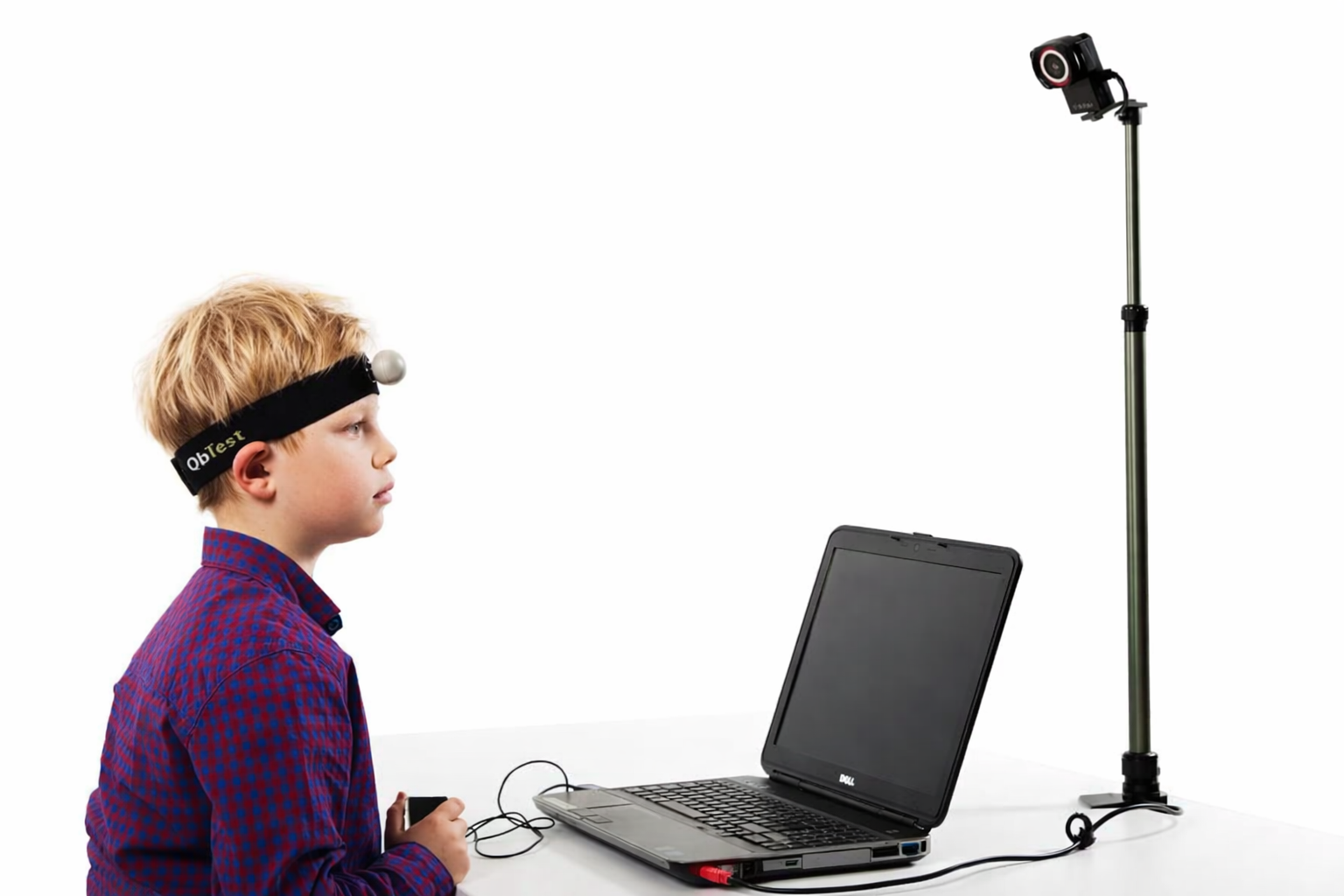
QbTest, which is completed in a clinic setting using motion tracking technology
QbCheck, which is web based and can be used in schools or supervised remote settings
Both tools measure the three core traits associated with ADHD:
Hyperactivity
Inattention
Impulsivity
The difference is that these traits are measured using real data. Movement, reaction time, and attention patterns are recorded and compared to age based norms.
Instead of relying only on observation, schools and clinicians gain measurable insight.
WHY THIS MATTERS FOR GIFTED STUDENTS AND STUDENTS WITH LEARNING CHALLENGES
Attention concerns do not look the same in every child.
In gifted students, ADHD can be easy to miss. These students may score very high in reasoning and verbal ability. They often understand concepts quickly and grasp complex ideas with ease. Because of this, their strengths can compensate for attention difficulties for a long time.
But sustained focus may still be inconsistent. Written output may lag behind thinking ability. Task completion may depend heavily on interest or structure.
For students with learning challenges, the picture can look different but just as confusing. A child may already struggle with reading, writing, or processing speed. When attention difficulties are layered on top, it can intensify frustration, slow progress, and increase emotional stress.
In both groups, adults may see uneven performance.
Teachers may describe the student as bright but careless.
Or they may say the student is trying but not progressing.
Parents may hear that their child is capable but not applying themselves.
Or they may hear that the child needs to try harder.
Without objective measurement, it becomes interpretation.
With objective data, it becomes clarity.
THE ADHD PATTERN IN DATA
Objective assessment often reveals patterns that are difficult to see in daily classroom observation.
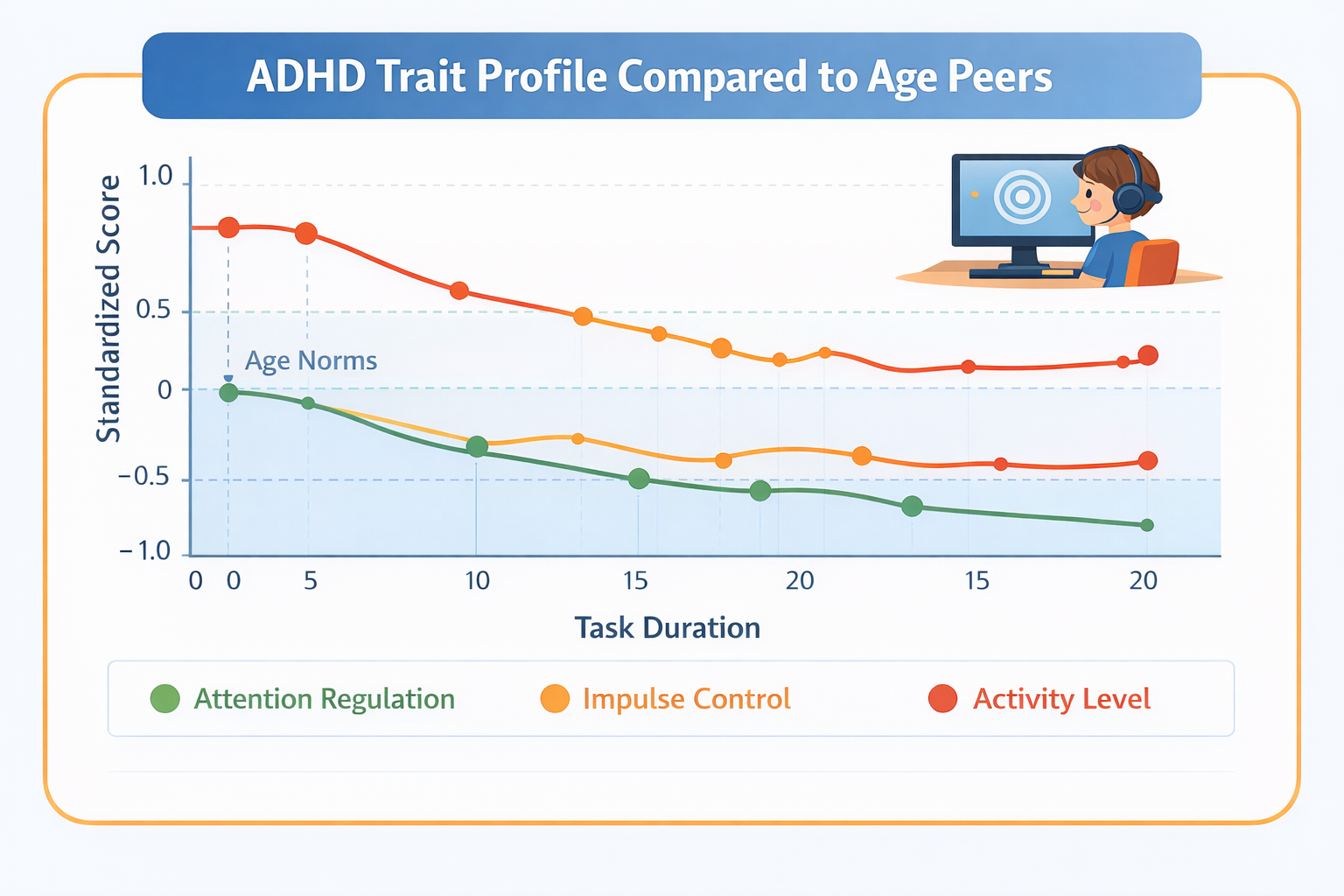
Example ADHD Trait Profile
What this type of graph may show:
Elevated activity levels compared to same age peers
Inconsistent response control
A noticeable decline in attention over time
When these patterns are visualized, conversations shift. Instead of debating motivation, teams can examine measurable regulation patterns.
HOW THE ASSESSMENT WORKS
During the assessment, the student completes a structured attention task that lasts about fifteen to twenty minutes.
In a clinic setting, movement is tracked using infrared technology. In school or remote settings, a standard webcam is used.
The system records:
Reaction time
Movement patterns
Impulse responses
Attention consistency
The results are compiled into a visual report that can be interpreted alongside a full clinical evaluation and DSM 5 criteria.
It does not replace comprehensive testing. It strengthens it.
*DSM 5 criteria is the official checklist of symptoms and requirements that must be met for a diagnosis.
WHY SCHOOLS ARE PAYING ATTENTION
Schools are often the first to notice when something feels off.
Early objective screening can:
Provide measurable data to share with healthcare providers
Support conversations about 504 plans or IEP eligibility
Clarify whether underperformance reflects boredom, anxiety, or ADHD
Track progress when interventions are introduced
For gifted students, this matters deeply.
When attention difficulties are missed, confidence can erode. A student who knows they are bright but struggles to perform consistently may begin to question their ability.
Clear data helps protect both achievement and self esteem.
THE FUTURE OF ADHD ASSESSMENT
While no single test can diagnose ADHD alone, Qbtech’s technology offers something invaluable: objective evidence. For schools, it’s an opportunity to partner with clinicians, streamline referrals, and give families confidence in the evaluation process.
Early intervention changes outcomes. Tools like Qbtech are helping schools become an active part of that change.
If you’d like practical guidance on interpreting evaluations and turning them into meaningful support plans, visit https://themindcenterforkids.com/workshop. It’s a valuable resource for families and educators who want testing to lead to action—not confusion.
The sooner we understand a child’s challenges, the sooner we can help them discover their strengths and see what’s possible.
At The Mind Center, we help children access accommodations that reflect how they actually perform under testing conditions, not just what a diagnosis says on paper. For many children, that includes extended time, testing over multiple days, and additional breaks.
To see how the right documentation led to approval, read our Success Story.
If you are navigating accommodations for college entrance or standardized exams, our College Testing page explains what testing agencies look for and how families can prepare.
When testing clearly shows functional impact, accommodations can open the door to fair access and real opportunity.
The Mind Center, LLC is a thought leadership mental health brand dedicated to helping parents, their kids, and the schools they attend. At The Mind Center LLC, we specialize in psycho-educational evaluations and offer a range of services to support children. Contact us today.